


Written By: Ahmed Rufa’i in Dutse
The Jigawa State Government has committed over N14.094 billion to subsidised agricultural inputs and other support programmes as part of efforts to enhance food production during the 2026 wet farming season.
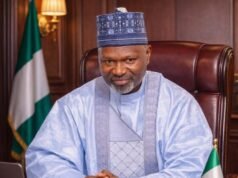
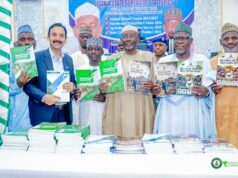
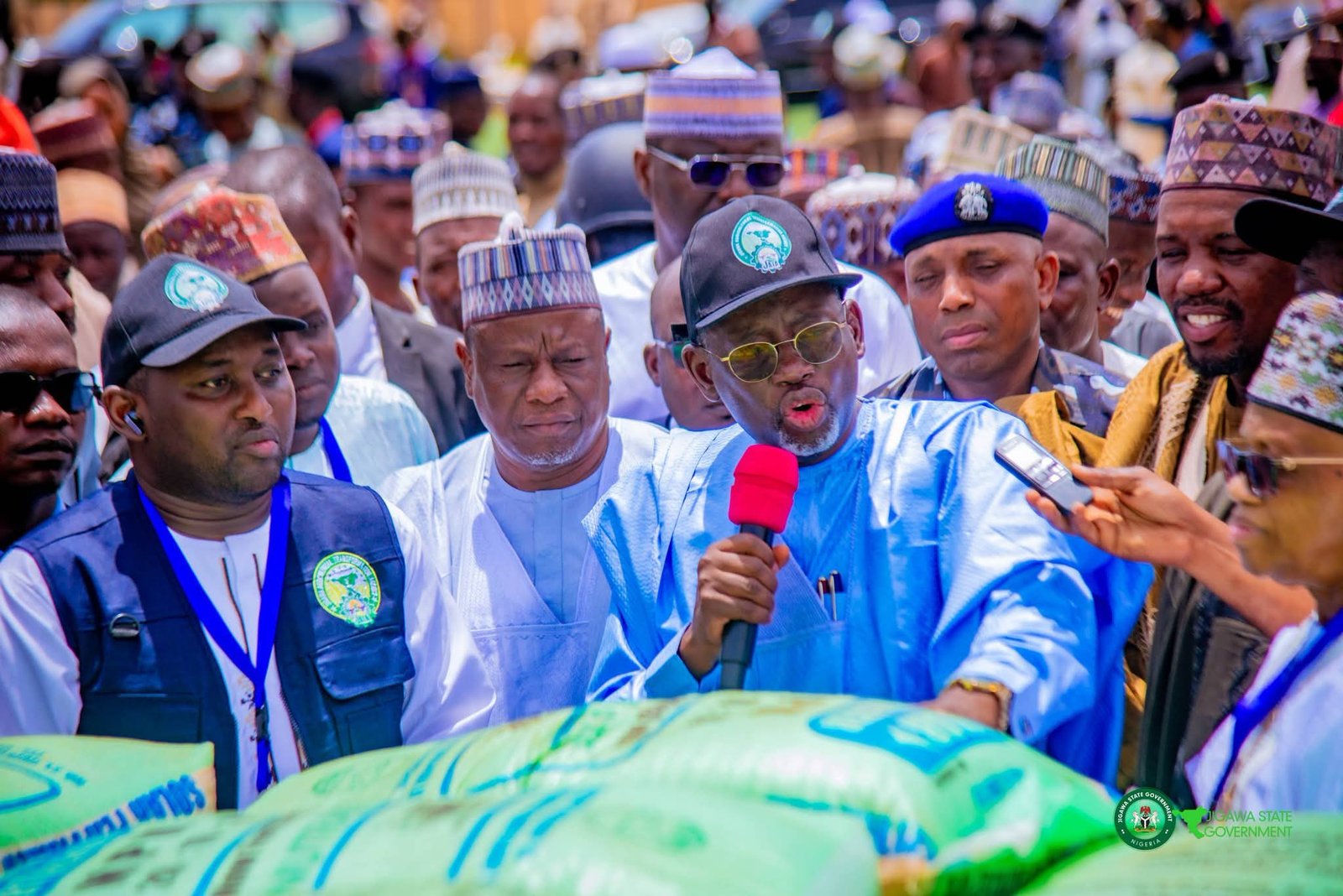
Governor Umar Namadi disclosed this on Saturday while launching the 2026 Wet Season Agricultural Support Programme at the Dutse Township Stadium, saying agriculture remains the cornerstone of the state’s economy and the bedrock of sustainable prosperity.
He reaffirmed his administration’s determination to transform Jigawa into Nigeria’s leading food-producing state through sustained investment in mechanisation, irrigation, agricultural financing, extension services and input support.
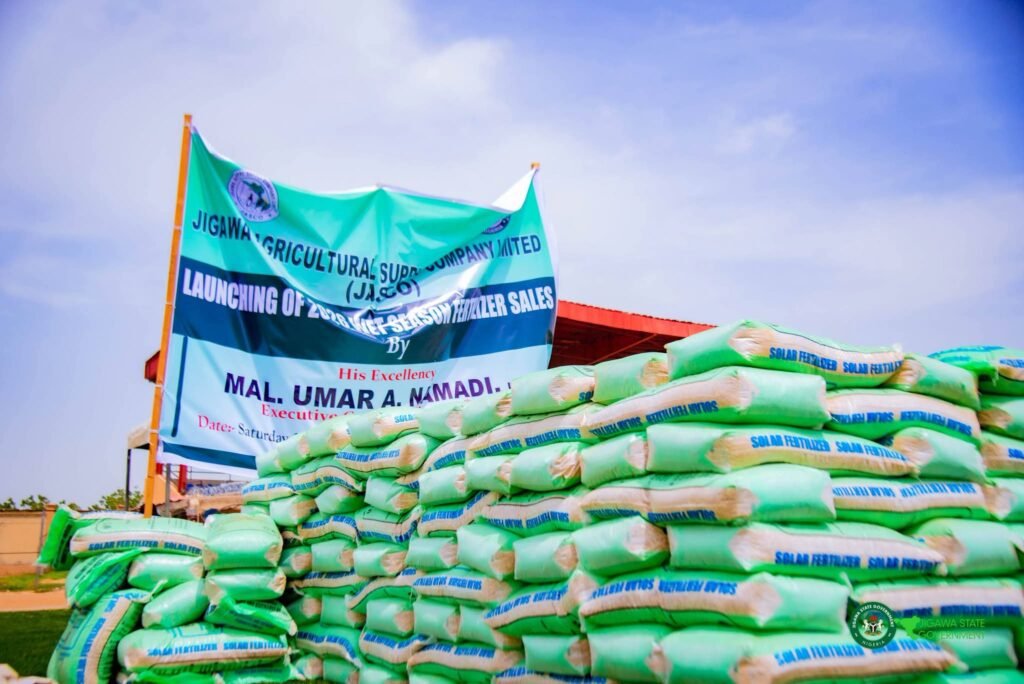
According to the governor, the intervention is designed to address the major challenges confronting farmers, including limited access to quality farm inputs, rising production costs and high energy expenses.
Namadi announced that 90,000 farmers would benefit from subsidised fertiliser under the programme. He explained that while the state government would fully sponsor 50,000 farmers, another 40,000 beneficiaries would receive support through a partnership involving the Bank of Agriculture (BOA) and StarAgri.
The governor also unveiled the distribution of 6,000 solar-powered water pumps to promote year-round irrigation farming and reduce production costs, alongside 1,185 motorcycles for agricultural extension agents to improve access to farming communities and enhance the delivery of modern farming techniques.
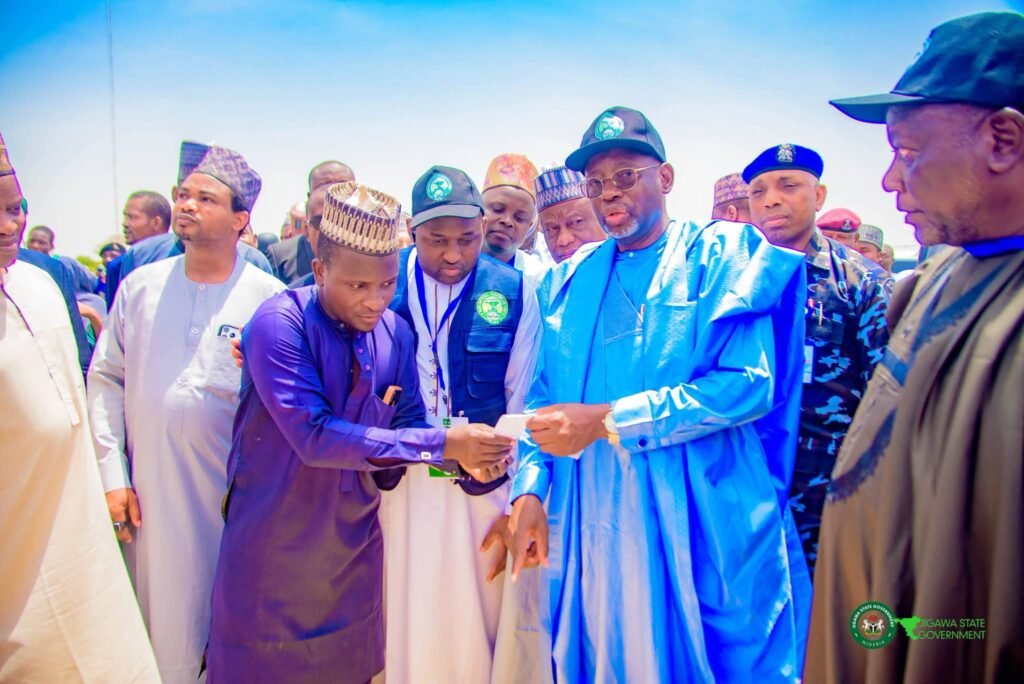
He disclosed that over 250,000 farmers had benefited from various agricultural interventions introduced by his administration in the last three years, covering farm inputs, mechanisation, irrigation, extension services and targeted support for women and youth engaged in agribusiness.
Highlighting achievements recorded in the sector, Namadi said his administration had deployed 1,700 extension agents, procured 450 tractors, 70 combine harvesters and other farm implements, established 20 modern greenhouses and four climate-smart agriculture centres, rehabilitated the Kuda and Dembo dams and developed 200 five-in-one rice commercial processing clusters across the state’s three senatorial districts.
The governor commended President Bola Ahmed Tinubu for initiating the Smallholder Farmers Programme through the Bank of Agriculture and for the Federal Government’s continued support in transforming agriculture in Jigawa from subsistence farming to mechanised commercial production.
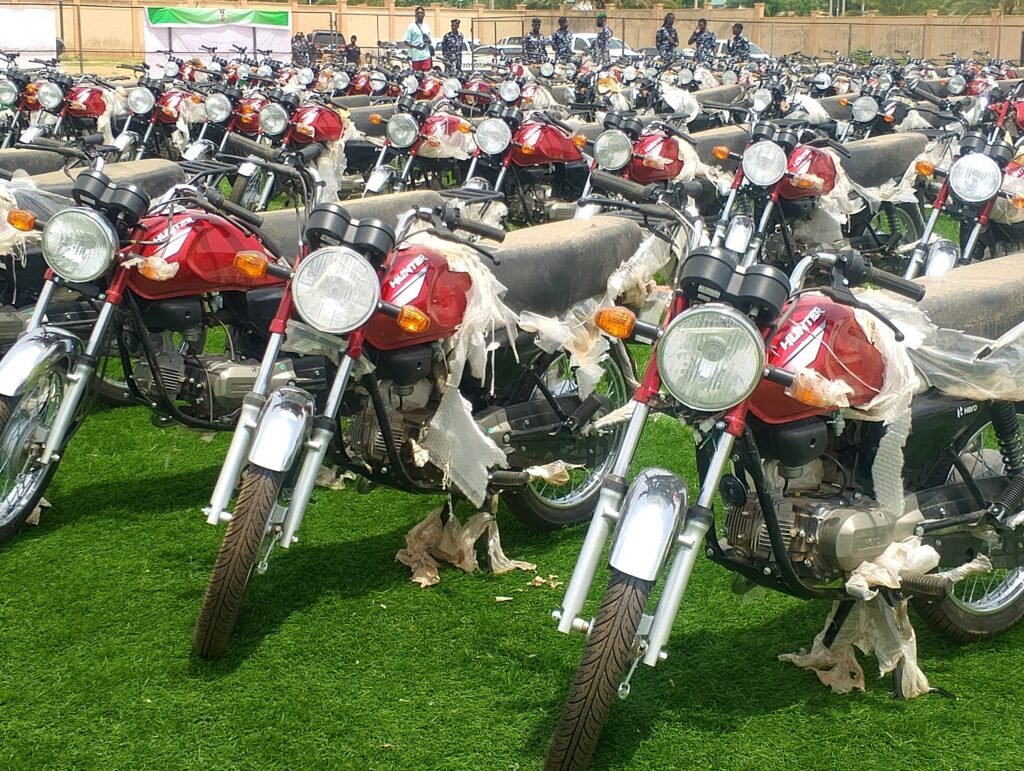
According to him, the collaboration has empowered thousands of smallholder farmers, strengthened food production and accelerated the state’s drive towards food security and economic prosperity.
He urged beneficiaries to utilise the farm inputs responsibly, work closely with extension officers and repay agricultural loans promptly to ensure the sustainability of the intervention.
Earlier, the Commissioner for Agriculture and Natural Resources, Hon. Muttaka Namadi, described the event as the unveiling of four strategic agricultural initiatives aimed at strengthening food security, improving rural livelihoods and stimulating economic growth.
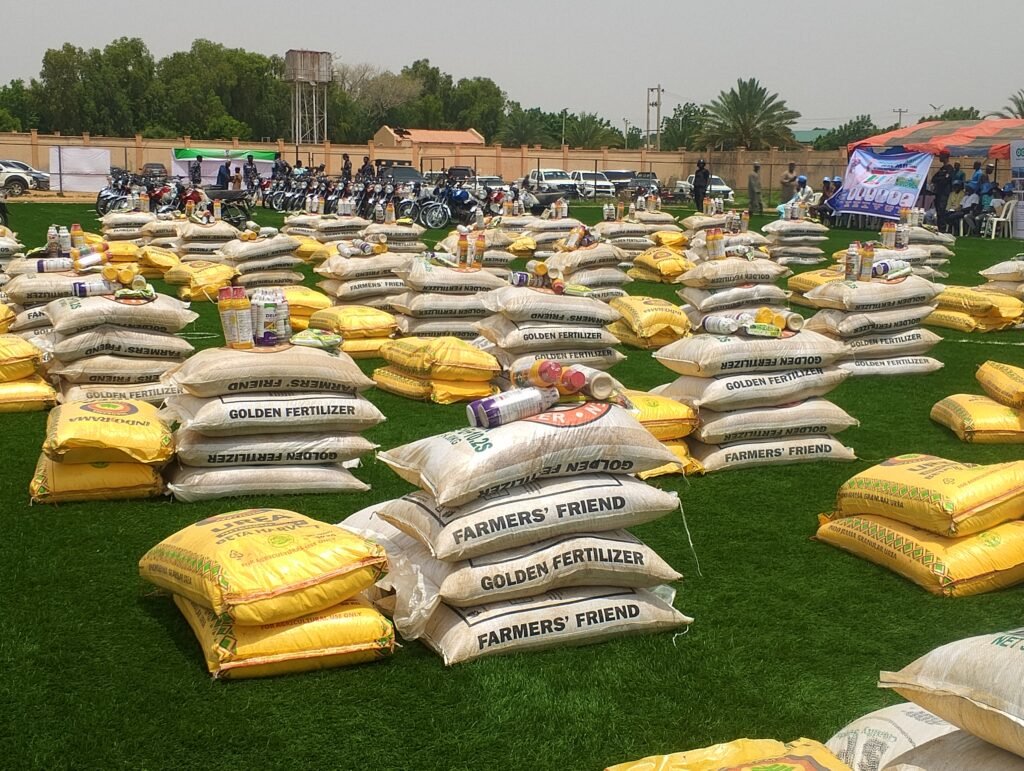
He listed the initiatives as the launch of the 2026 Wet Season Agricultural Input Distribution Programme, distribution of motorcycles to 1,185 J-AGRO extension agents, distribution of 6,000 solar-powered water pumps and the commencement of fertiliser sales through the Jigawa State Agricultural Supply Company (JASCO).
The commissioner noted that the interventions would improve farmers’ access to quality inputs, strengthen extension services, encourage climate-smart agriculture and ensure the availability of genuine fertiliser at subsidised rates.
Speaking on behalf of farmers, the Chairman of the All Farmers Association of Nigeria (AFAN) in Jigawa State, Alhaji Maiunguwa Jaga, described the intervention as timely and capable of transforming agricultural production across the state.
He said the subsidised fertiliser, solar-powered water pumps and other support packages would reduce production costs, increase yields and improve farmers’ livelihoods while boosting food security and economic growth across Jigawa State.