



By: Ahmed Rufa’i
The Dispute Resolution and Development Initiative (DRDI–DAG) expressed the needs for stronger fiscal transparency, enhanced budget performance, and inclusive citizen participation across local governments in Jigawa State.
This was contained in a press statement issued signed and made available to TRUTHS FINDER in Dutse, Jigawa state capital by the Executive Director,
Dispute Resolution and Development Initiative (DRDI), Dr. Muhammad Mustapha Yahaya.
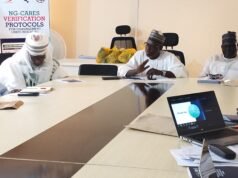
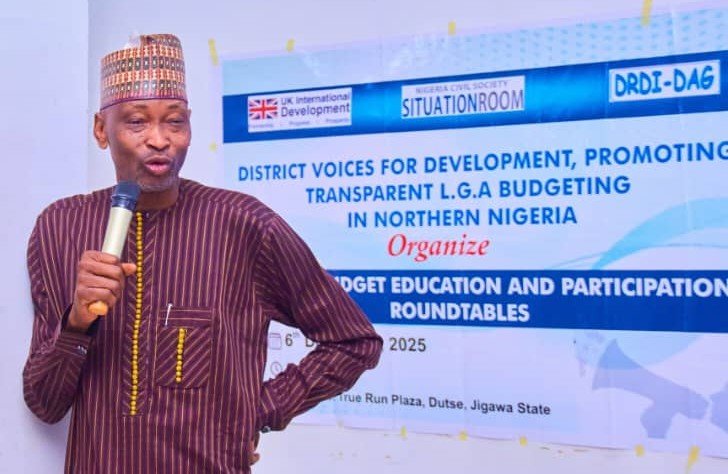
According to the statement, the call followed the presentation of findings from its comprehensive research on Local Government Budget Performance, Fiscal Transparency, and Citizen Participation (2020–2024) during a stakeholder engagement held in Jigawa State.
Dr. Mustapha Muhammad Yahaya explained that the research assessed six local government areas, Ringim, Kiyawa, Mallam Madori, Gagarawa, Hadejia, and Birnin Kudu and discovered that most of them remain heavily dependent on federal allocations, with 94–100% of their total revenue sourced from the Federation Account Allocation Committee (FAAC).
Dr. Yahaya explained that the study revealed a severe transparency and access deficit, noting that budget documents in most local government areas (LGAs) were not publicly accessible, noting that researchers encountered systemic opacity, where access to fiscal information largely depended on personal networks rather than institutional mechanisms, a trend that undermines open governance principles and erodes public confidence in local authorities.

Despite these challenges, Dr. Yahaya pointed out that there are notable reform opportunities. He recommended the need for initiating Business Premises Registration Drive and establish Ward Budget Committees across Local Government Areas.
“LGAs need to strengthen Grants Management Unit, introduce, Youth Budget Forums, revive Capital Development Fund, increase social sector allocation, pilot a Participatory Budgeting Annual Assembly, launch an Emergency Revenue Diversification Initiative, conduct a personnel audit, introduce a Traditional Council Budget Interface as well as a Property Tax Pilot and forming a Joint Legislative–Community Oversight Team” he added.
To tackle these systemic fiscal and governance challenges, he noted that DRDI–DAG proposes several strategic reforms which includes adopting performance-based grants, realistic revenue forecasting guidelines, Quarterly budget performance reviews chaired by LGA chairpersons and the establishment of Fiscal Responsibility Committees as well as standardizing budget templates across LGAs will improve uniformity and comparability.
“At DRDI, we believe Jigawa’s local governments can only deliver meaningful development when community participation is institutionalized,” he said, urging each LGA to legislate participatory budgeting and launch a “Know Your LGA Budget” campaign in local languages. He also called for the creation of Ward Development Charters, training of finance officers on modern revenue systems, and digital transparency portals to enhance fiscal reporting and citizen monitoring.
Dr. Yahaya made a strong call to action, urging the Jigawa State Government to approve and fund the LGA Fiscal Sustainability Plan and institutionalize participatory budgeting guidelines in all LGAs, as well as establish a State–LGA Joint Technical Committee for fiscal oversight.
He also appealed to local government chairpersons to implement the recommended reforms, personally lead community budget engagements, and publish quarterly performance reports.
He further called on development partners to support capacity-building programs in revenue and project management, fund digital governance initiatives, and sponsor peer-learning exchanges with model LGAs in other states.
Similarly, civil society groups and communities were urged to actively engage in budget consultations and oversight, utilizing transparency portals and feedback mechanisms to sustain reforms and accountability.
Dr. Yahaya also appealed to the media and advocacy networks to continue amplifying awareness among relevant stakeholders, stressing that access to budget information is not merely a technical necessity but a democratic imperative that can rebuild public trust and ensure local governments truly serve their people.
Concluding his remarks, Dr. Yahaya stated that the fiscal challenges facing Jigawa’s LGAs are deep-rooted but surmountable. With deliberate reforms, transparent governance, and inclusive citizen participation, he said, local governments can evolve from being dependent administrative units to accountable and self-sustaining development engines.