






By: Ahmed Rufa’i
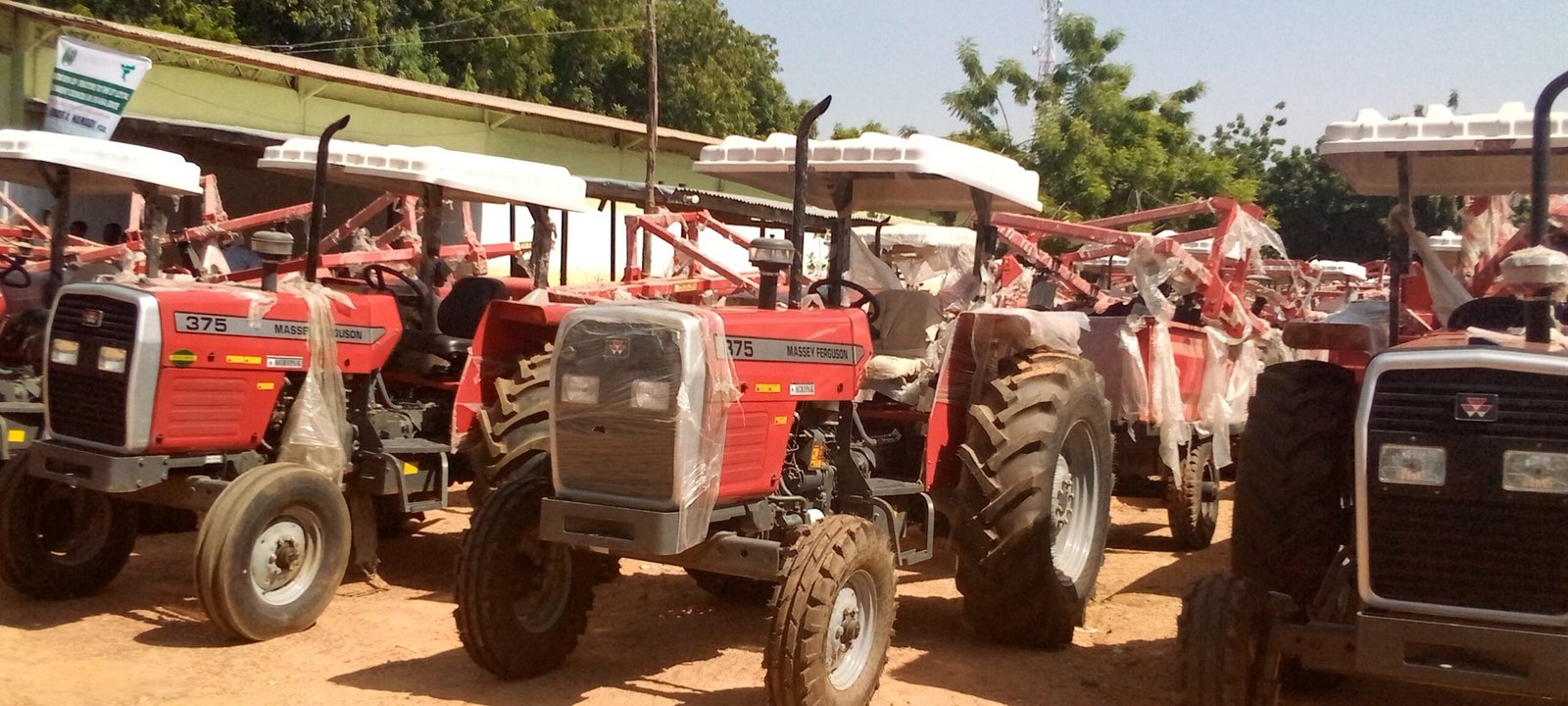
The Sasakawa Africa Association (SAA) has called for a shift from politically driven tractor distribution schemes to professionally managed and commercially viable Agricultural Mechanisation Centres (AMCs).
The call was contained in a communiqué issued at the end of a high-level mechanisation summit held in Kano State, where stakeholders decried decades of policy gaps that have undermined Nigeria’s mechanisation drive.
According to the communiqué, the absence of a clear, evidence-based policy and operational framework for establishing and managing AMCs has led to repeated failures of large-scale tractor procurement programmes by federal and state governments.
Participants observed that thousands of machines procured under past interventions have fallen into disrepair due to weak governance, poor maintenance culture and lack of cost-recovery systems, leaving farmers with high production costs and low productivity.
SAA, serving as technical partner under the Kano State Agropastoral Development Project (KSADP), convened the summit themed: “Learning from Experience to Build Sustainable Agricultural Mechanisation Centres in Kano State.”

The event attracted key stakeholders, including officials of the Kano State Ministry of Agriculture and Natural Resources, the Kano State Agricultural and Rural Development Authority (KNARDA), private operators, development partners and farmer organisations.
Deliberations focused on developing a sustainable and commercially viable framework for the three AMCs established by SAA across Kano State’s agricultural zones, with emphasis on governance, business models and financial sustainability.
The summit noted that Nigeria’s mechanisation level remains below 0.3 horsepower per hectare, far beneath the 1.5 horsepower benchmark recommended by the Food and Agriculture Organization.
Stakeholders proposed a private sector-led or Public-Private Partnership (PPP) model, with government providing policy oversight and an enabling environment, while Managed Service Providers handle day-to-day operations.
They also recommended a structured, time-bound subsidy of 10 to 20 per cent in the early years of operations, particularly to support smallholder farmers, women, youth and cooperatives.
SAA Country Director, Dr. Godwin Atser, stressed that procurement alone does not guarantee impact, warning that without clear operational models and accountability systems, past mistakes would persist.
The summit mandated SAA to finalise a detailed operational roadmap for the AMCs, expressing optimism that a professionally managed mechanisation system would boost productivity, reduce drudgery and support agricultural transformation in Kano State.