



Nigeria is navigating one of its most challenging moments in recent history, as the administration of President Bola Ahmed Tinubu (PBAT) confronts mounting crises across the security, health, and education sectors, three pillars essential to the development of any nation’s human capital.
The deteriorating conditions in these areas have renewed debate about the effectiveness of the President’s cabinet and whether a comprehensive internal review is now unavoidable.Under the Constitution, the President is empowered to form an Executive Council by appointing ministers based on the principle of federal character.
This framework is intended to enable the President to fulfill his social contract to citizens and ensure that national leadership reflects the diversity of the country. However, governing a nation as complex as Nigeria requires much more than political balancing. Ministerial appointments must go beyond patronage, personal loyalty, or political compensation.
To serve effectively, a minister must possess strategic insight, administrative competence, and a deep understanding of the sector they oversee. Nigeria’s current challenges raise questions about whether all members of the present cabinet meet this standard.
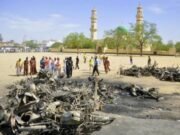
A Security Architecture Under StrainNigeria’s security situation continues to worsen despite changes in the service chiefs. The recent Kebbi school abductions and the disturbing Kwara church attack underscore the fragility of public safety and the persistence of violent criminal networks.Even more troubling is the emergence of what some analysts describe as democratic insecurity, amplified by the ongoing leadership crisis within the PDP in Abuja.
Political instability of this nature often spills into the broader society, heightening tensions and putting lives at risk.Health Sector on the Brink The health sector is similarly strained. Health workers, including doctors, have repeatedly embarked on strike due to unmet demands and deteriorating working conditions.
A new wave of industrial action is already underway, leaving vulnerable citizens, especially the poor—without access to essential medical services.
The consequences are dire: preventable illnesses are becoming fatal, and public hospitals are overwhelmed.Education Facing Renewed Disruptions In the education sector, the Academic Staff Union of Universities (ASUU) is preparing to resume its suspended strike following the expiration of the four-week negotiation window granted to the government.
If this action proceeds, the entire tertiary education system will once again be thrown into turmoil, further weakening an already strained academic environment and jeopardizing the future of millions of students.
A Time for Introspection and Leadership Given the gravity of these challenges, this is the right moment for President Tinubu to undertake a sincere and objective assessment of his cabinet’s performance.
Nigeria cannot afford stagnation in sectors that directly influence national stability, economic growth, and human development.To restore public confidence and revive hope in the administration’s capacity to deliver, there is an urgent need to revisit the leadership, direction, and efficiency of the ministries responsible for security, health, education, and other critical areas.Nigeria stands at a crossroads. Whether the nation regains its footing or sinks deeper into crisis will depend largely on the decisions the President makes now, and on his willingness to demand competence, accountability, and results from those chosen to
Ahmed Ilallah
serve.alhajilallah@gmai.com