





Written By: Ahmed Rufa’i in Dutse
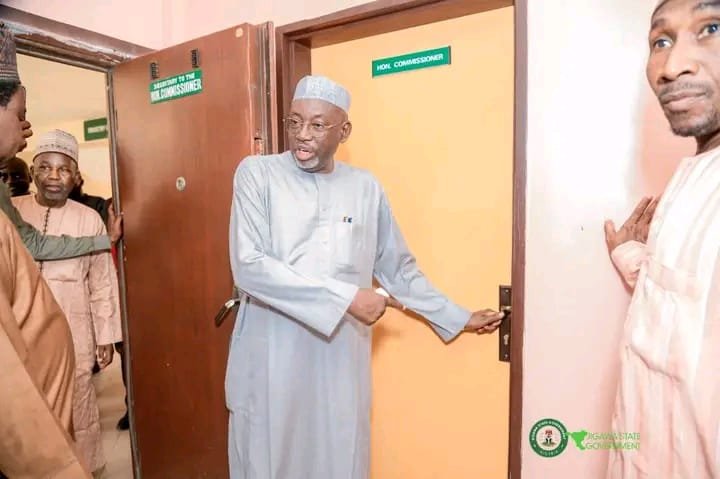
Governor Umar Namadi’s unexpected visit to the Jigawa State Secretariat on Monday exposed widespread absenteeism in the state civil service, with the governor finding only one commissioner at work while several key government offices, including those of the SSG, Head of Service and Accountant General, were locked during official working hours.
The unscheduled visit to the State Secretariat in Dutse on Monday formed part of the governor’s routine assessment of workers’ attendance and commitment to service delivery.
Moving from one ministry to another, Governor Namadi was greeted by unusually deserted offices, with only a handful of messengers and security personnel present in many ministries.
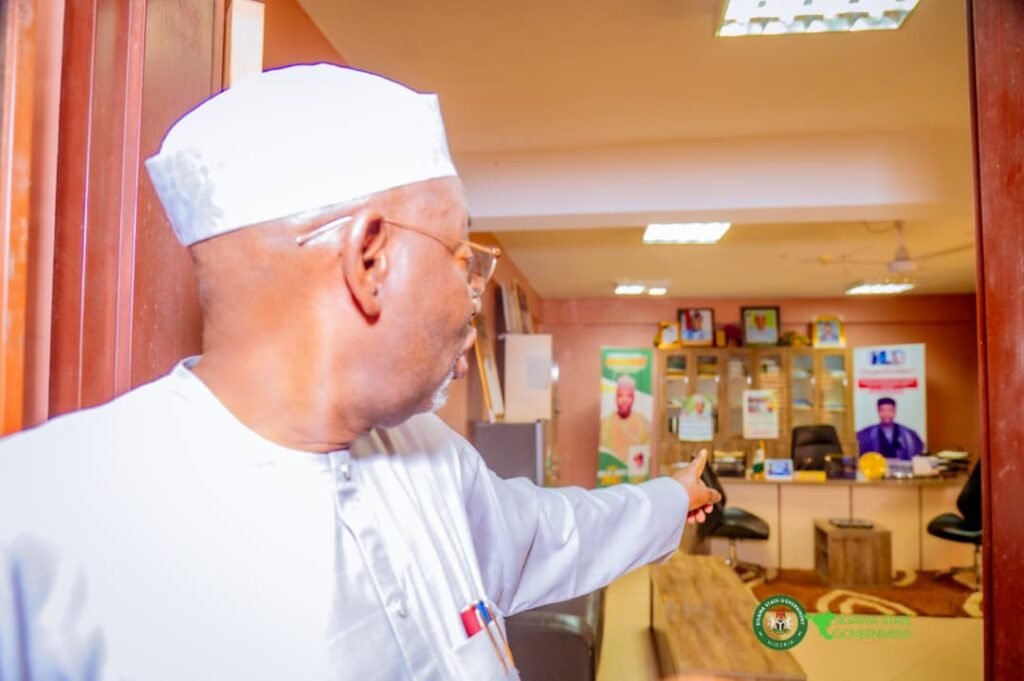
Among the offices found locked were those of the Secretary to the State Government, the Head of the Civil Service and the Accountant General. Several commissioners and permanent secretaries were also absent at the time of the inspection.
The Commissioner for Works was the only commissioner found in his office, while the Permanent Secretaries of the Ministries of Health and Livestock Development were also on duty.
The inspection revealed that only one out of the state’s 18 commissioners was at work when the governor arrived.

Visibly displeased by the situation, Governor Namadi condemned the poor attendance, describing it as unacceptable and inconsistent with the standards expected of public office holders.
He warned that his administration would not tolerate absenteeism, indiscipline or negligence of duty, stressing that every public servant has a responsibility to report to work promptly and discharge assigned responsibilities effectively.
According to the governor, his administration is determined to build a disciplined, accountable and result-oriented civil service capable of delivering efficient services to the people of Jigawa State.
The surprise inspection is the latest in a series of measures introduced by the Namadi administration to strengthen accountability, improve productivity and ensure that government institutions remain responsive to the needs of citizens.