




Written By: Ahmed Rufa’i, in Dutse
The Civil Society Scaling-Up Nutrition in Nigeria (CS-SUNN), with support from the United Nations Children’s Fund (UNICEF), has set an ambitious target of reducing the stunting rate among children in Jigawa State from the current 55.7 per cent to 20 per cent within the next three years.
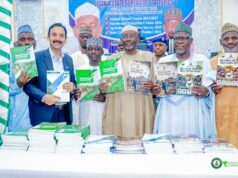
The target was unveiled by the Co-Chair of the National Steering Committee of CS-SUNN, Dr. Radio Olusegun, during a two-day capacity-building workshop on nutrition advocacy for members of the CS-SUNN Jigawa State Chapter held at Tahir Guest Palace, Dutse.
The training, organised by CS-SUNN in collaboration with UNICEF, was designed to strengthen the leadership and advocacy capacity of state chapter members, develop key performance indicators (KPIs) for executive officers, enhance understanding of alliance protocols, and produce an annual work plan for the chapter.
Speaking with journalists on the sidelines of the workshop, Olusegun acknowledged that Jigawa had recorded some progress in tackling child malnutrition but stressed that more concerted efforts were required to safeguard the future of children in the state.
According to him, reducing malnutrition and stunting demands stronger collaboration among government agencies, development partners, civil society groups and community stakeholders.
“There is a need for sustained engagement and collective action to address malnutrition and child stunting in Jigawa State for improved socio-economic development,” he said.
He identified increased budgetary allocation and timely release of nutrition funds, implementation of six-month maternity leave for breastfeeding mothers, and strengthening of community-based nutrition initiatives, including the Masaki Nutrition Programme, as critical measures for achieving the target.
Olusegun noted that the training would equip participants with practical skills in effective advocacy, alliance sustainability, strategic alignment, impact-driven programming and work plan development.
He also highlighted the challenges facing nutrition advocacy in Nigeria, including high rates of malnutrition, inadequate funding, weak policy implementation, poor coordination among sectors and insufficient data for evidence-based decision-making.
Despite the challenges, he expressed optimism that growing political commitment to nutrition, strong civil society networks, international commitments under the Sustainable Development Goals (SDGs) and the Scaling Up Nutrition (SUN) Movement, as well as the increasing use of digital tools, provide opportunities to accelerate progress.
The CS-SUNN official commended participants for their commitment and urged them to translate the knowledge gained from the workshop into concrete advocacy actions that would improve nutrition outcomes across Jigawa State.