


By: Ahmed Rufa’i.
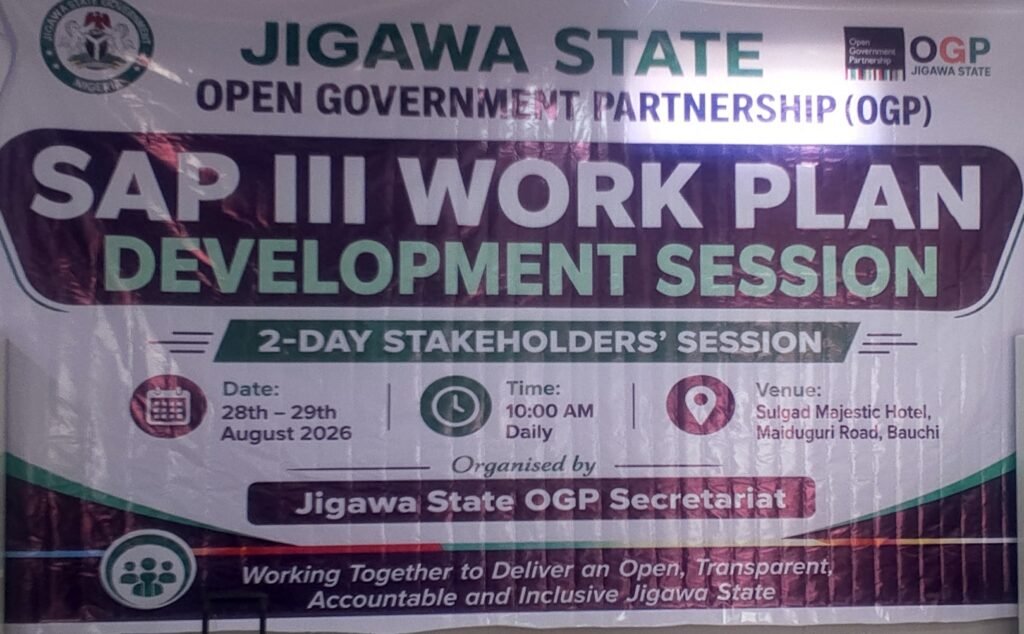
The Jigawa State Government government officials, Civil Society Organizations and other stakeholders under the Open Government Partnership (OGP) has conveyed on Bauchi to finalized a developed document a realistic and mesearable SAP III document.
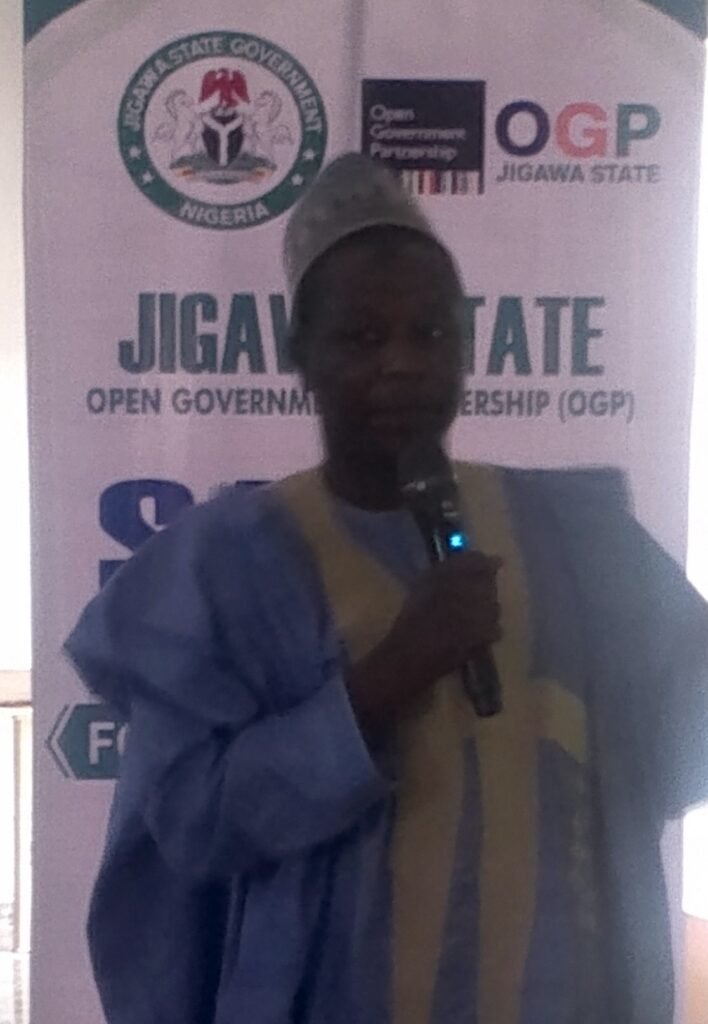
Speaking during the opening ceremony of the meeting the permanent secretary, ministry of Budget and Economic Planning, Alhaji Muhammad Sani has called on government institutions, civil society organisations (CSOs), development partners, private sector operators and the media to collaborate in developing a realistic and measurable work plan for the implementation of the Open Government Partnership (OGP) State Action Plan III (SAP III).
Sani said the OGP provides an important platform for promoting transparency, accountability, citizen participation and responsive governance, noting that its principles were consistent with Jigawa State’s development agenda and governance priorities.
He said the development of the SAP III Work Plan offered stakeholders an opportunity to assess progress made under previous commitments, identify areas requiring improvement and agree on practical and measurable activities capable of translating government commitments into tangible results for citizens.
According to him, effective and accountable public financial management remains fundamental to sustainable development, stressing that citizens must have confidence that public resources are properly planned, allocated, utilised and accounted for.
He emphasised the importance of active participation by citizens, civil society and other stakeholders to ensure that government policies and programmes respond effectively to the needs of the people.
The Permanent Secretary said the inclusive nature of the OGP process, which brings together government institutions, CSOs, development partners, the private sector, media and other stakeholders, was central to the success of the initiative.
He urged participants to focus on realistic, measurable, time-bound and result-oriented commitments rather than aspirational objectives without clear implementation arrangements.
“Each activity should have clearly defined responsibilities, timelines, indicators and expected outcomes, as well as mechanisms for monitoring progress,” he said.
Sani also urged stakeholders to draw lessons from previous OGP Action Plans, saying areas where significant progress had been recorded should be consolidated and scaled up, while implementation challenges should be honestly identified and addressed through practical solutions.
He said SAP III should align with the state’s broader development priorities, particularly public financial management, fiscal transparency, citizen engagement, access to information, effective service delivery, social accountability, digital governance and inclusive development.
The Permanent Secretary said the state government remained committed to strengthening institutions and creating an enabling environment where citizens could meaningfully participate in governance, while public institutions become increasingly transparent, accountable and responsive.
He urged thematic leads, secretaries and representatives of Ministries, Departments and Agencies (MDAs) to actively participate in the process and contribute their experience and expertise.
He said the objective was to develop a work plan capable of moving the state’s OGP commitments “from paper to action, and from action to measurable impact.”
Sani expressed confidence that the collective efforts of stakeholders would produce a strong, coordinated and achievable work plan that would contribute to transparency, accountability, citizen participation and improved governance in the state.
The OGP State Action Plan III is part of Jigawa’s ongoing open governance reform process. The state government had earlier approved four strategic thematic areas for the 2026–2027 action plan: fiscal transparency and accountability, access to justice, climate action, and anti-corruption.
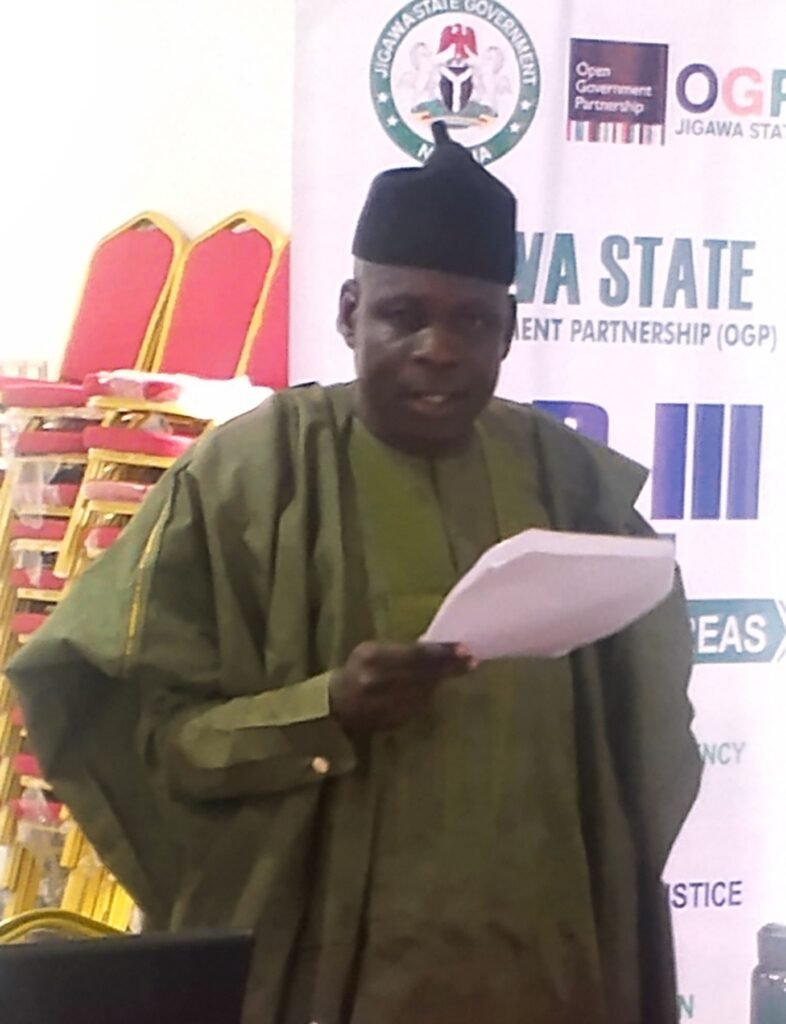
In his opening remarks, the OGP Steering Committee Co-Chair, Comrade Ayuba Muhammad, said the meeting provided an important opportunity to translate the approved SAP III commitments into a practical and implementable work plan.
Muhammad commended the Jigawa State Government and the OGP Secretariat for bringing stakeholders together and for their continued commitment to promoting transparency, accountability, citizen participation and open governance in the state.
He said the participation of thematic leads and their secretaries, representatives of MDAs, co-chairs, the OGP Secretariat and other stakeholders demonstrated the partnership and collective ownership required for the successful implementation of the programme.
He urged participants to be practical, open-minded and result-oriented in developing the work plan.
“We should ensure that the activities we agree upon are not only ambitious but also realistic, achievable and responsive to the needs and priorities of the people of Jigawa State,” he said.
Muhammad stressed the need for clearly defined responsibilities, timelines and measurable indicators, saying effective implementation required proper coordination, ownership and continuous monitoring.
He reaffirmed the Steering Committee’s commitment to supporting the process and contributing to the successful implementation of SAP III.
Also speaking, the OGP Secretary, Sani Uzairu, said the meeting was aimed at identifying and agreeing on key activities and priorities under SAP III and developing a clear and actionable work plan for the 2026–2027 implementation period.
Uzairu said the stakeholders would also agree on responsibilities, timelines and expected results, while ensuring that activities were realistic, achievable and properly coordinated.
He added that the process would include the validation of the draft framework, agreement on the next steps and finalisation of the work plan to guide the effective implementation of SAP III.
The session is expected to provide a coordinated framework for implementing Jigawa State’s OGP commitments and strengthening collaboration between government and non-state actors in promoting open and accountable governance.