

Written By: Ahmed Rufa’i, in Dutse
Stakeholders in Jigawa State have called on governor Malam Umar Namadi to made realistic revenue projections and strategic budget in 2027 and ensure judicial spending to prevent the abandonment of projects and loss of public confidence.
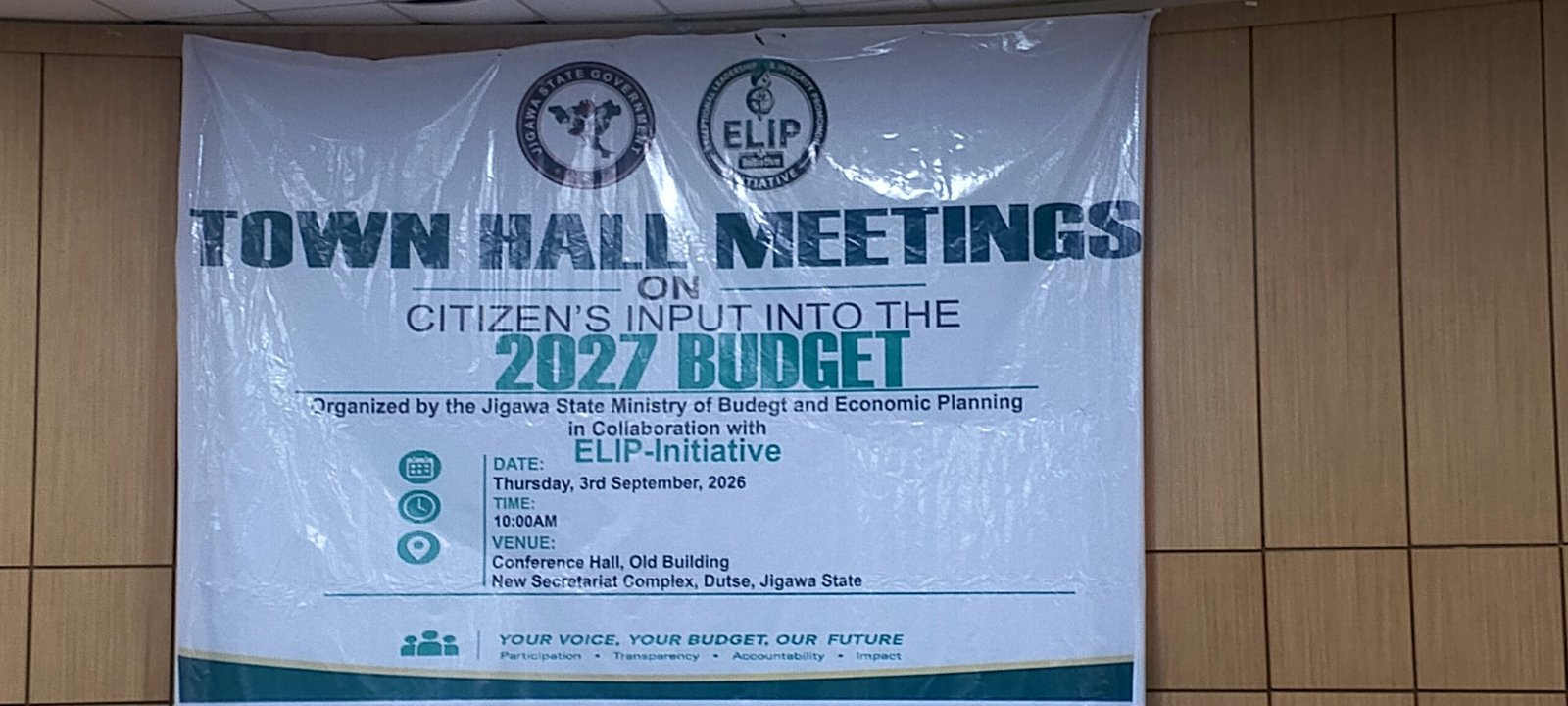
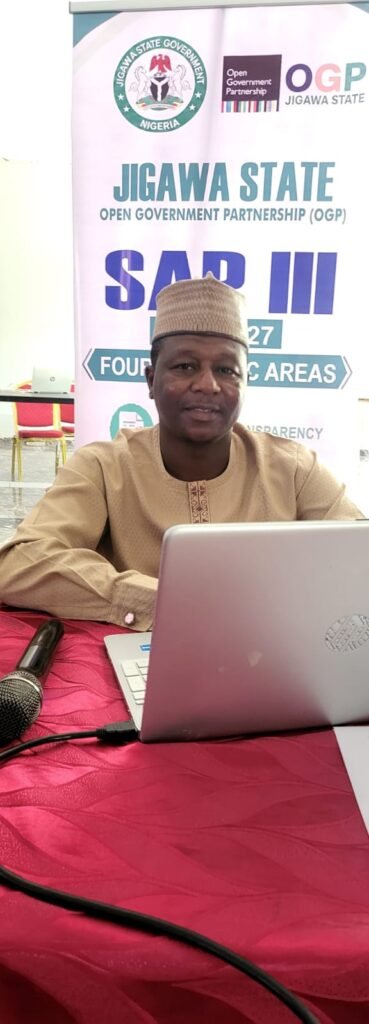
The stakeholders spoke during the citizens’ budget town hall meetings organised across the three senatorial districts by the Exceptional Leadership and Integrity Promotion Initiative (ELIP-Initiative), in collaboration with the Jigawa State Ministry of Budget and Economic Planning where they unanimously kicked against the proposed a trillion budget size for the state.
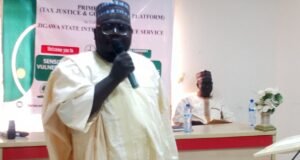
Speaking at the meeting the Executive Director of ELIP-Initiative, Comrade Isah Mustapha, said the annual consultation was aimed at allowing citizens and other stakeholders to contribute directly to the formulation of the state’s budget.
He said representatives from the 287 political wards participated in the exercise, with each ward expected to identify three priority projects or interventions for consideration in the 2027 budget.
According to him, between 1,200 and 1,500 inputs are expected to be generated from the consultations.
He said the participants were also sensitised on the need to distinguish between community “needs” and “wants” and concentrate on projects capable of addressing pressing challenges.
“We sensitised them on the difference between needs and wants and encouraged them to focus on priorities that would have direct impact on their communities,” he said.
Isah said the consultations focused mainly on human capital development, health, education, empowerment, environment, water and sanitation.
He, however, warned that an unrealistic budget could frustrate development and weaken citizens’ confidence in government.
“When you have an unrealistic budget, it creates a lack of trust among citizens because projects and programmes captured in the budget may never see the light of day.
“When citizens see projects in the budget that are not implemented, they may assume that the money has been siphoned. This is one of the conversations we are having,” he said.
He said the MTEF projections indicated about N570 billion, while expected revenue was put at approximately N560 billion, stressing that the figures suggested the need for caution in determining the size of the budget.
Isah said discussions were ongoing with the Planning Board and State Executive Council to ensure that the 2027 budget reflected the state’s financial capacity.
He said the 2027–2029 Medium-Term Expenditure Plan was already available, adding that government should prioritise projects with the greatest impact rather than spread scarce resources thinly.
“We should utilise the available resources so that we can have projects and programmes that will add value to the lives of citizens. We need strategic prioritisation of our spending,” he said.
He added that the inputs gathered during the town hall meetings would be analysed according to ministries, departments and agencies, as well as constituencies, before being forwarded for consideration in the budget process.
Also speaking, the Commissioner for Budget and Economic Planning, Hon. Babandi Umar Gantsa, represented by the Director of Budget, Malam Auwalu Muhammad, said citizens’ participation remained an important component of the state’s budget process.
He said the engagement was anchored on the constitutional responsibility of government to promote the security and welfare of the people and harness resources for the overall prosperity and wellbeing of citizens.
Muhammad said the 2027 budget engagement was designed to give citizens and other stakeholders an opportunity to influence the state’s development priorities.
Meanwhile, the state’s 2025 budget performance presented at the meeting showed that government spent N491.619 billion out of the N756.3 billion approved expenditure, representing 65 per cent implementation.
The presentation, titled “Overview on Citizens’ Participation in Budgetary Processes,” showed that actual revenue stood at N550.656 billion against the projected N756.3 billion, representing 73 per cent performance.
Federal Account allocation contributed N254.595 billion against N325.7 billion projected, while internally generated revenue stood at N89.608 billion against a target of N141.333 billion.
Aids and grants recorded 100 per cent performance, with N47.977 billion realised, while no revenue was obtained from the N79.25 billion projected from loans.
Other revenue sources generated N82.691 billion against N62.039 billion projected, representing 133 per cent performance.
On expenditure, personnel costs recorded 97 per cent implementation, with N88.825 billion spent out of N91.257 billion budgeted.
Overhead expenditure stood at N52.37 billion against N66.137 billion budgeted, representing 79 per cent, while debt servicing recorded 96 per cent implementation after N4.915 billion was spent out of N5.1 billion.
Capital expenditure recorded 58 per cent implementation, with N344.351 billion spent out of N588.84 billion budgeted.
Infrastructure received the largest sectoral allocation of N156.049 billion, out of which N119.192 billion was spent, representing 76 per cent implementation.
Education recorded 59 per cent implementation, with N62.293 billion spent out of N105.412 billion budgeted, while the health sector achieved 72 per cent after N30.881 billion was spent out of N43.613 billion.
Agriculture recorded N26.346 billion expenditure out of N60.057 billion budgeted, while N7.515 billion was spent on water projects from the N13.245 billion allocation.