



Written By: Ahmed Rufa’i in Dutse
The Jigawa State Government and the Sasakawa Africa Association (SAA) have strengthened their partnership to transform agriculture, empower 9,000 farmers and boost food production across the state’s 27 local government areas.
The partnership is targeting increased agricultural productivity, job creation and poverty reduction through mechanisation, improved inputs, climate-smart farming, stronger extension services and better access to markets and agricultural finance.
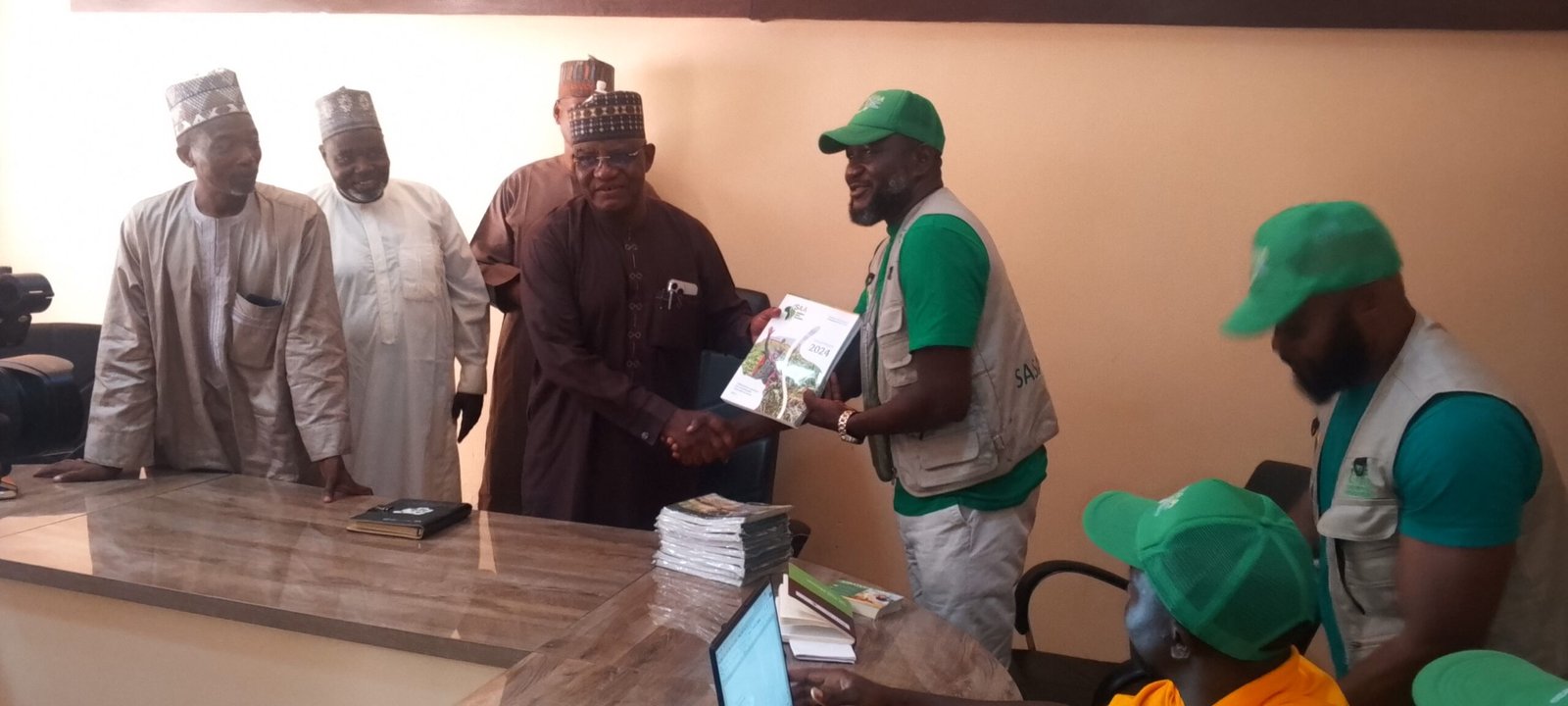
The Commissioner for Agriculture and Rural Development, Alhaji Muttaka Namadi, represented by the Permanent Secretary, Alhaji Auwalu Ado Shehu, disclosed this when officials of SAA visited the ministry.
He said the government had adopted a “business unusual” approach to agriculture, with the establishment of the Jigawa Agricultural Transformation Agency to accelerate the transition from subsistence farming to commercial agriculture.

According to him, the state has distributed solar-powered water pumps to farmers and is preparing another batch to expand dry-season farming and promote climate-smart agricultural practices.
He said the government’s rainy-season rice programme provides farmers with inputs and extension services at a 30 per cent subsidy, while farmers accessing loans through the Bank of Agriculture also receive a 30 per cent government contribution towards their financing.
The commissioner added that farmers purchasing solar-powered irrigation pumps under the government’s cash-and-carry arrangement receive a 30 per cent discount.
He said the state was also developing a comprehensive farmers’ database to establish accurate information on the number, location and activities of farmers, adding that the data would help government organise them into clusters and provide targeted support.
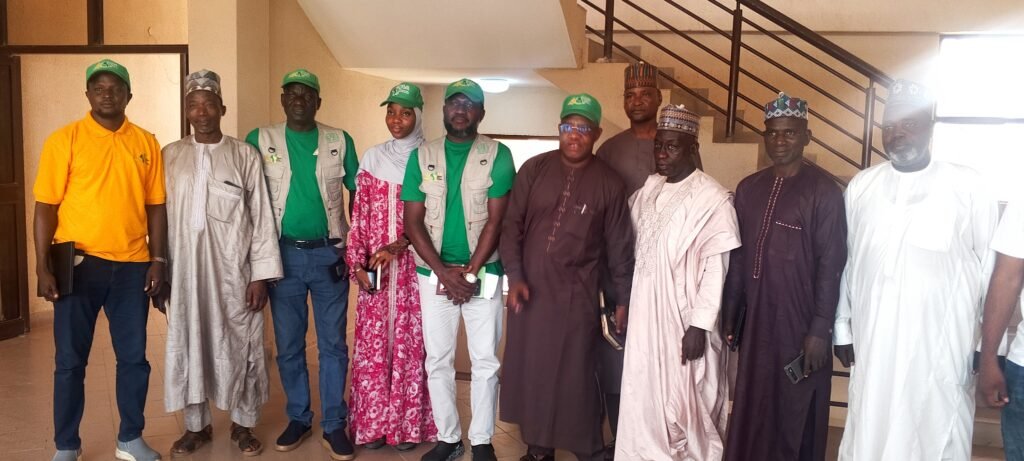
Namadi described the SAA partnership as critical to the state’s agricultural transformation agenda, stressing that farmers must embrace modern technologies to remain productive.
“It’s either you follow the changes or you are left behind. That is why the state government is up and doing to transform agriculture, and we have been seeing results,” he said.
He said Governor Umar Namadi had demonstrated commitment to mechanised agriculture through the procurement of 360 combine harvesters with implements from China and the receipt of another 100 tractors under the Federal Government’s Renewed Hope Agenda.
“This means that Jigawa has about 400 tractors, despite being a relatively small state. This is a clear demonstration of the government’s commitment to mechanising agriculture,” he added.
Speaking on the partnership, SAA-Nigeria Country Director, Dr. Godwin Atser, represented by the Technical Coordinator, Resilient and Sustainable Agriculture Food System, Mr. Nathaniel Otene, said the collaboration was aimed at improving the livelihoods of smallholder farmers.
Otene said the five-year SAA-Jigawa Partnership Project, running from 2025 to 2029, covers the state’s 27 LGAs and focuses on food and nutrition security, agricultural productivity, economic opportunities and climate resilience.
He said Jigawa State was providing $100,000, estimated at about N140 million, as counterpart funding, while SAA-Nigeria, the Jigawa Agricultural and Rural Development Authority and the Ministry of Agriculture and Natural Resources were implementing the programme.
The project focuses on rice, wheat, cassava, groundnut and sorghum, with special attention to women, youths and persons with disabilities. It promotes regenerative agriculture, quality seed production, climate-smart technologies, farmer learning platforms and market-oriented farming.
Otene said 9,000 farmers would directly benefit from improved technologies, training, quality inputs and market opportunities, while the programme would also strengthen agricultural extension services.
He disclosed that 28 farmer organisations had already been assessed and 16 empowerment packages proposed, including six rice mills, five groundnut kneaders, three cassava processors, a solar-powered pump and a thresher.
The project has also established 36 demonstration and seed-multiplication plots and trained 120 extension agents, lead farmers and community-based seed multiplication hosts in good agronomic practices, regenerative agriculture, data collection and farmer business models.
During its initial implementation between June and November 2025, the programme reached 511 farmers in 14 communities across seven LGAs, while field days in Kaugama and Taura attracted hundreds of farmers, officials and community leaders.
Atser said the partnership was designed to position Jigawa as a model of agricultural innovation and resilience, stressing that providing farmers with the right tools, knowledge and technologies would create pathways to sustainable prosperity.