



By Ahmed Ilallah
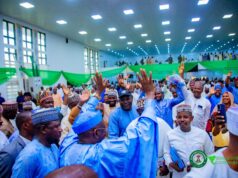
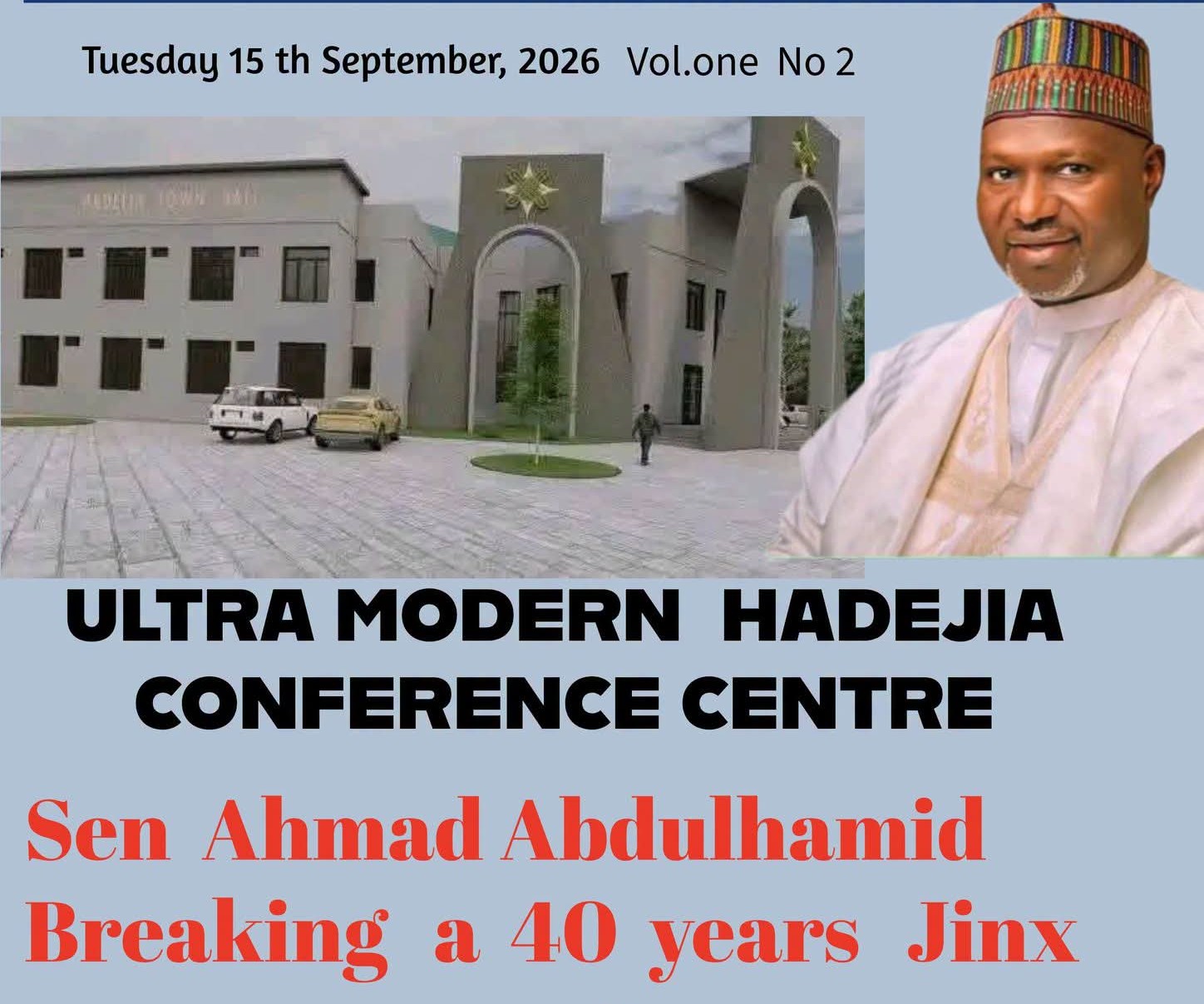
Today, the people of Hadejia and the wider Jigawa Northeast Senatorial District woke up to what could become a significant milestone in the history of the region: the emergence of a modern, multi-purpose conference centre and guest accommodation facility facilitated by Senator Ahmed Abdulhamid Malam-Madori.
At first glance, a conference centre may appear to be just another development project. But for Hadejia, a historic town and an important administrative, commercial and cultural centre of Jigawa Northeast, the significance goes far beyond the physical structure.
Traditionally, every community, regardless of its size or status, needs a common meeting point where citizens, leaders, government officials, traditional institutions, civil society organisations, professional bodies and other stakeholders can gather to deliberate on issues affecting their communities.
For decades, however, Hadejia has faced the absence of a standard and purpose-built public facility capable of accommodating major conferences, seminars, workshops, stakeholder engagements and other important gatherings.
This gap has often forced organisations and institutions to depend on makeshift venues, private halls or facilities that may not be adequately equipped for large-scale engagements.
It is against this background that the proposed Hadejia Multi-Purpose Conference Centre, located at the old prison site, deserves particular attention.
If completed as envisioned, the project will not merely provide another physical facility; it will address a longstanding infrastructural need and create a permanent platform for intellectual, governmental, professional, cultural and community engagements.
This is why the question arises: Has Senator Malam-Madori finally broken a hundred-year jinx?
The phrase may sound dramatic, but it captures the historical nature of the challenge. Hadejia has a long and distinguished history as a centre of political authority, commerce, education and culture. Yet, despite this heritage and its growing population and importance, the town has continued to lack a modern central conference facility commensurate with its status.
The new project therefore represents more than bricks and mortar. It could become a symbol of Hadejia’s transition from historical prominence to modern institutional development.
Beyond Hadejia itself, the centre has the potential to serve the wider Jigawa Northeast Senatorial District. Conferences, capacity-building programmes, government consultations, public hearings, civil society engagements, professional meetings and cultural activities could all find a suitable home there.
For the people of the constituency, the real value of the project will ultimately be measured by its quality, timely completion, accessibility and effective management. A public facility of this nature should be designed and maintained to serve generations, not merely to meet the immediate political or administrative needs of the present.
Senator Malam-Madori therefore deserves recognition for identifying a longstanding infrastructural gap and responding to it with a project that has the potential to leave a lasting institutional legacy.
Politics should not be judged only by speeches, campaigns and promises. It should also be measured by the enduring institutions and infrastructure that elected representatives leave behind.
If successfully completed and properly managed, the Hadejia Multi-Purpose Conference Centre could become one of those projects whose significance will be appreciated not only today, but many years from now.
Perhaps, therefore, history may eventually record this intervention as the moment when Hadejia’s long search for a modern central conference facility finally came to an end.
Ahmad is a freelance national commentator from Hadejia, Jigawa state