



Written By: Ahmed Rufa’i, in Dutse
The United Nations Children’s Fund (UNICEF), with support from the United Kingdom’s Foreign, Commonwealth and Development Office (FCDO), has launched the second phase of the Climate Resilient Infrastructure for Basic Services (CRIBS II) programme in Jigawa State, targeting 24 public institutions across the state.
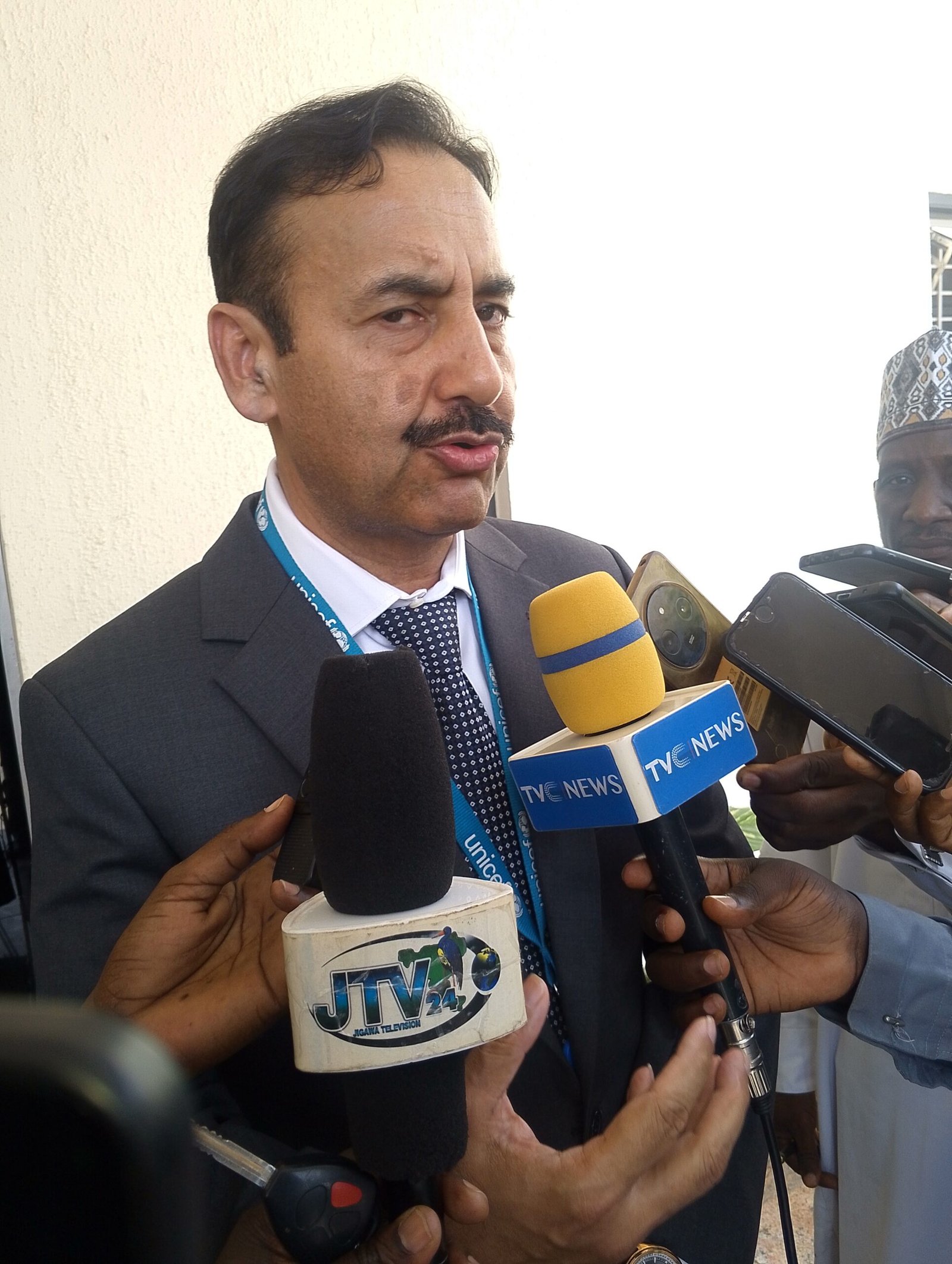
Speaking at the inception meeting for the project in Dutse, UNICEF Chief of Field Office, Kano, Mr. Shafeequr Rahman, said the programme was designed to strengthen climate-resilient infrastructure in schools and healthcare facilities while improving water, sanitation and hygiene services.
Rahman explained that the successful implementation of the first phase of the project in Jigawa and Kano states informed the expansion of the programme to additional states.
According to him, CRIBS II will cover 14 primary healthcare centres and 10 schools in Jigawa State, with water and sanitation interventions integrated into all the facilities.
“The fact that we are now implementing a second phase shows that the first phase was successful. We are grateful to FCDO for its generous support and funding, as well as the commitment shown by the Jigawa State Government and other partners,” he said.
He noted that lessons learnt from the first phase had been incorporated into the new programme, particularly in climate-responsive infrastructure design, operations and maintenance, sustainability measures, community participation, and government-led monitoring and supervision.
Rahman said research conducted during the first phase provided critical insights that would enhance implementation under CRIBS II and ensure long-term sustainability of the facilities.
He added that UNICEF would continue to provide technical support throughout the project cycle to ensure successful delivery and maximum impact.
“We have learnt a lot from the first phase and are building on those experiences. We are strengthening community ownership, improving maintenance systems and ensuring that local technical personnel are equipped with the skills required to sustain the facilities,” he stated.

The UNICEF official commended the Jigawa State Government, implementing partners and communities for their contributions to the success recorded under CRIBS I, describing the project as a model intervention.
Also speaking, Chairman of Taura Local Government Area, Hon. Hambali, expressed appreciation to Governor Umar Namadi, UNICEF and FCDO for bringing the intervention to the state.
He described the project as a major boost to education and healthcare delivery, particularly at the grassroots level.
Hambali assured UNICEF and its partners of the council’s support in facilitating the implementation of the project, stressing that Taura Local Government would provide an enabling environment for contractors and development partners.
He said the intervention would complement government efforts in improving public infrastructure and service delivery across communities.
The CRIBS programme focuses on enhancing climate resilience in critical public facilities, particularly schools and healthcare centres, while ensuring access to sustainable water, sanitation and hygiene services for vulnerable communities.
During his presentation at the meeting, the WASH Specialist UNICEF Kano Field Office Dr Ubah Lawal said the Climate Resilient Infrastructure for Basic Services (CRIBS II) Project is designed to strengthen the resilience of essential public facilities against the adverse impacts of climate change while ensuring uninterrupted access to basic services for communities.
Dr. Ubah Lawal added that the inception meeting was convened to present the concept and scope of the CRIBS II Project, familiarize government partners, UNICEF consultants, site engineers, and contractors with the project objectives, and enhance stakeholder understanding of their respective roles and responsibilities.
He noted that meeting also provided an opportunity to introduce contractors and project supervisors to stakeholders, as well as share the list of target locations and the specific scope of rehabilitation works planned for each site.
The project recognizes that climate-related hazards such as flooding, drought, heat stress, and windstorms continue to threaten public infrastructure and service delivery. To address these challenges, CRIBS II will implement a range of adaptation and resilience measures.
To mitigate flooding, the project will construct flood drainage canals, raise platforms for boreholes, elevate toilet structures, and strengthen perimeter walls to prevent floodwaters from entering facility premises. In response to drought conditions, deeper boreholes, solar-powered water storage systems, and expanded water supply facilities will be provided to ensure reliable access to water during periods of scarcity.
To reduce the effects of heat stress, facilities will benefit from heat-reflective paints, false ceilings, improved natural ventilation systems, tree planting for shade, and solar-powered cooling solutions. Furthermore, measures to minimize damage from windstorms will include the planting of windbreak trees and the construction of protective perimeter walls.
The CRIBS II Project interventions will focus on four key areas. The first is Facility Infrastructure Adaptation, which includes the rehabilitation of roofs, ceilings, and walls, installation of water harvesting and drainage systems, and construction of gates, fences, and related infrastructure.
The second is Boosting Water, Sanitation and Hygiene (WASH) Services in Extreme Situations through the provision of deep solar-powered boreholes, large water storage facilities, distribution points, and climate-resilient sanitation systems.
The third intervention area is Energy Resilience, which involves the installation of solar and solar-hybrid power systems, battery storage units, solar panels, solar-powered cold-chain equipment, and other renewable energy solutions to ensure uninterrupted services.
The fourth area is Facility Premises Adaptation, which includes tree planting for shade and protection against wind and dust, construction of walkways in flood-prone areas, raised access routes, and internal drainage systems.
Through these interventions, the CRIBS II Project aims to enhance the climate resilience of public facilities, improve access to essential services, and safeguard communities against the growing impacts of climate change.