






Written By: Ahmed Rufa’i in Dutse
The National Population Commission (NPC) has launched a full digital birth and death registration system across Jigawa State, describing the initiative as a major step towards strengthening Nigeria’s civil registration system and providing credible demographic data for national development.
The Federal Commissioner representing Jigawa State at the NPC, Suleiman Umar made the announcement on Friday in Dutse during a press briefing held to commemorate the 2026 World Population Day and the commencement of the nationwide Electronic Civil Registration and Vital Statistics (E-CRVS) system.
He said the digital registration, powered through the VitalReg platform, became operational across the 27 local government areas of the state on July 1, 2026, in line with the Federal Government’s digital transformation agenda.
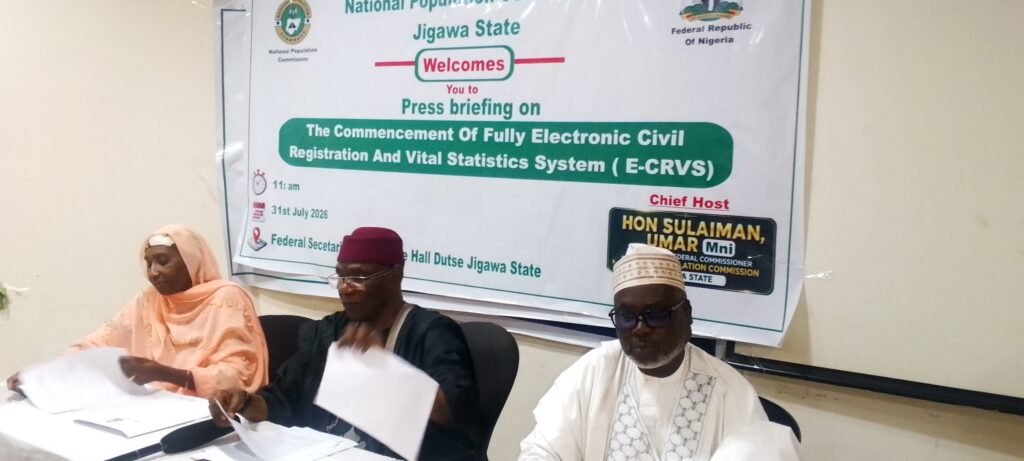
According to him, the initiative will provide faster registration services, 24-hour online access, improved data accuracy, digital certificate issuance where applicable, reduced paperwork and waiting time, while creating a more secure and credible national civil registration database.
Umar said the reform followed the inauguration of the national E-CRVS system by President Bola Ahmed Tinubu in November 2023 as part of efforts to modernise governance and strengthen legal identity management.
He disclosed that Nigeria records about five million births annually, but millions of births and deaths still go unregistered, noting that birth registration coverage stands at about 57 per cent nationwide, while death registration remains below 20 per cent.
To close the gap, he said the Commission had established 4,011 registration centres across the country’s 774 local government areas, with plans to increase the number to about 8,000.
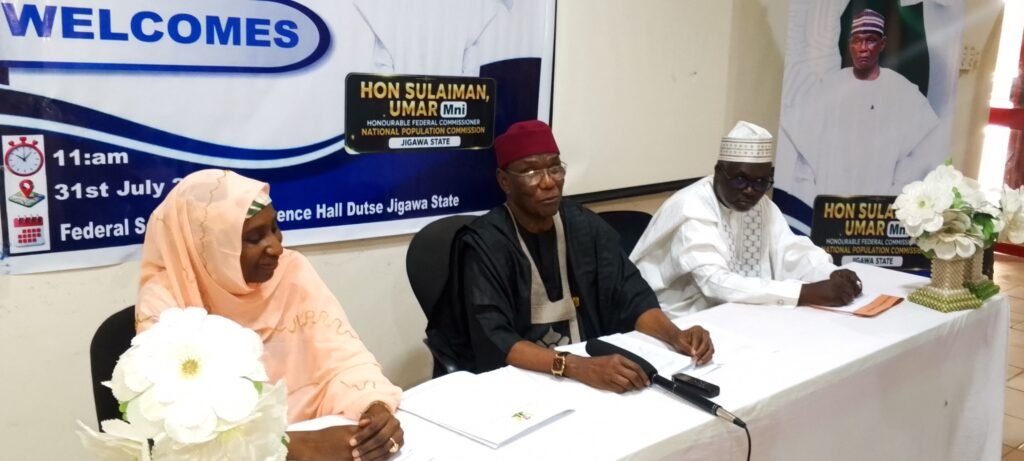
“The success of this historic reform depends on the active participation of all stakeholders. Every birth and death must be registered promptly to strengthen national planning and ensure every Nigerian has a legal identity,” he said.
The Federal Commissioner explained that the Commission had entered into a partnership with the Association of Local Governments of Nigeria (ALGON), National Identity Management Commission (NIMC), UNICEF, and Barnksforte Technologies Limited to decentralise registration services and improve access at the grassroots.
He clarified that while fees had been reviewed for specialised administrative services such as record modifications and certificate re-issuance, birth registration and birth notification services remain highly subsidised to encourage universal registration.
Speaking on this year’s World Population Day theme, “Realising the hopes and aspirations of young people—today and in the future,” Umar urged governments at all levels to invest more in education, healthcare, skills acquisition and employment opportunities for young Nigerians.
He noted that with an estimated population of 238 million, Nigeria remains Africa’s most populous nation, while young people aged 15 to 29 account for about 30 per cent of the country’s population.
The Commissioner said available demographic data showed that youth unemployment remained high despite government interventions, while adolescent fertility and the large number of out-of-school children continued to pose significant development challenges.
He, however, acknowledged ongoing reforms under President Bola Tinubu’s Renewed Hope Agenda, including the 3 Million Technical Talent (3MTT) programme, the Nigerian Education Loan Fund (NELFUND), vocational training initiatives and expanded digital birth registration.
Umar also renewed the Commission’s call for a credible, technology-driven national Population and Housing Census, insisting that effective planning depends on accurate population data.
“We cannot plan for a population we do not accurately count. A credible census remains the most reliable instrument for evidence-based planning and equitable resource allocation,” he said.
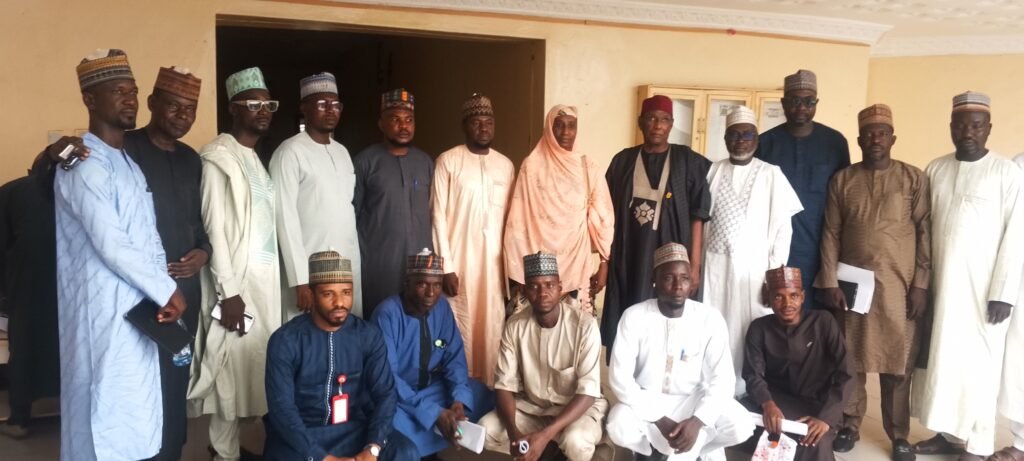
Earlier, the NPC State Director, Mrs. Hannatu Musa Ma’aji, welcomed the new Federal Commissioner, expressing confidence that his leadership would strengthen birth registration, improve data quality and deepen collaboration with stakeholders across Jigawa’s 27 local government areas.
She reaffirmed the commitment of the Commission’s staff to supporting the Federal Commissioner in advancing civil registration, demographic data production and evidence-based planning in the state.