






Written By: Ahmed Rufa’i in Dutse
The Centre for Information Technology and Development (CITAD) has received more than 2,000 reports involving gender-based violence (GBV), digital rights violations and abandoned community projects through its digital reporting platforms.
CITAD Digital Rights Lead, Mr. Ali Sabo, disclosed this shortly after the closing of a two-day training on digital safety and online protection for women human rights defenders and journalists from Jigawa and Bauchi states.
Sabo said the alarming rate of reported cases prompted CITAD to develop Reporttrix, a software application that combines three reporting platforms previously operated by the organisation.
He said the platforms had, over the years, recorded more than 2,000 complaints involving GBV, digital rights abuses and abandoned government projects.
According to him, CITAD has directly followed up almost 500 of the reported cases, while more than 100 others were referred to relevant institutions and stakeholders for further action.
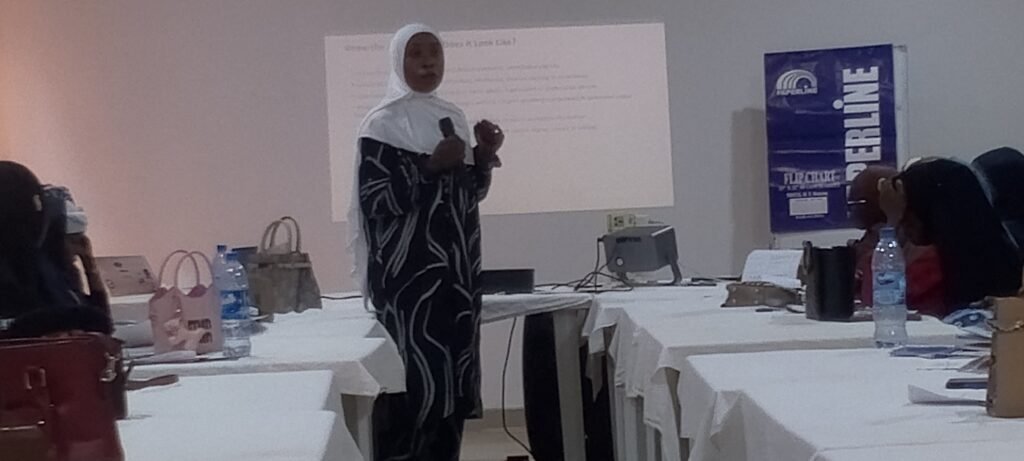
Sabo identified inadequate reporting as one of the major challenges hindering efforts to tackle GBV and digital rights violations, noting that cultural and social barriers often prevent victims from speaking out.
He urged young people and community members to make greater use of the reporting platform to report cases of GBV, digital rights violations and abandoned projects in their communities.
He also called on the government, judiciary, police and prosecution authorities to strengthen the investigation and prosecution of perpetrators of GBV and other forms of abuse.
Speaking on the training, CITAD Project Officer for Strengthening Digital Resilience and Online Protection for Women Human Rights Defenders and Journalists, Mrs. Amina Khalid Mohammed, said the programme was designed to equip women with the knowledge and skills needed to protect themselves from threats in the digital space.
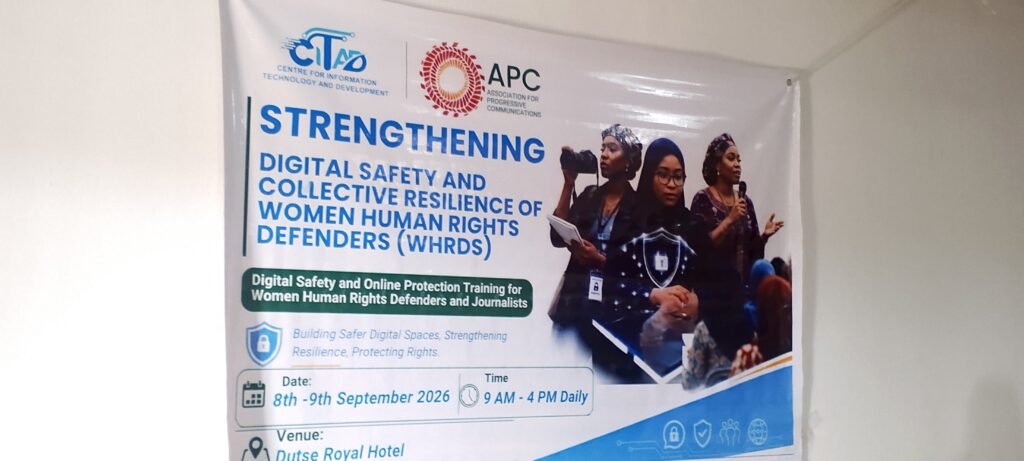
She said 40 women human rights defenders and journalists from Jigawa and Bauchi participated in the training, with 20 participants drawn from each state.
Mohammed said the training was organised under CITAD’s Strengthening Digital Resilience and Online Protection for Women Human Rights Defenders and Journalists project, with support from the Association for Progressive Communications (APC).
She explained that participants were trained on securing digital devices, protecting personal information and responding appropriately to cyberstalking, harassment, phishing and other forms of online abuse.
According to her, another cohort of the programme would be organised in Kano to expand the reach of the digital safety initiative.
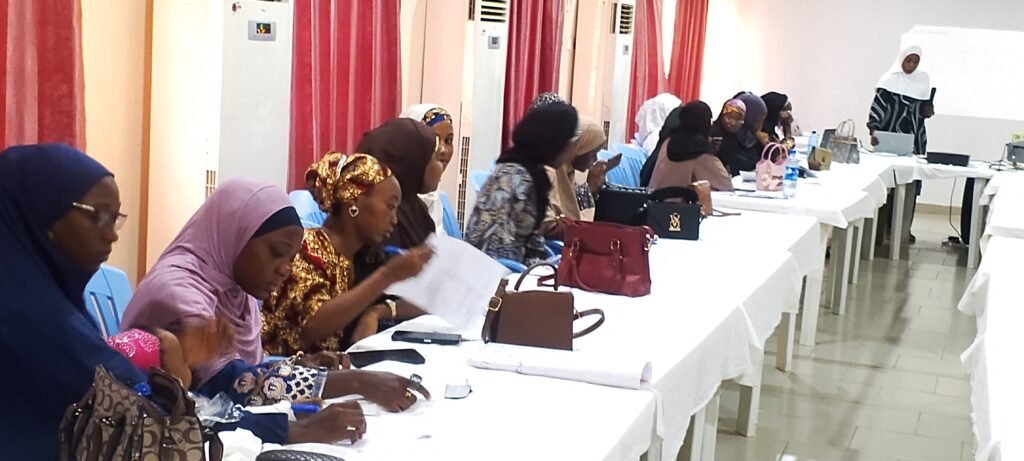
Mohammed said the increasing exposure of women and girls to digital exploitation, harassment and other forms of abuse made the training necessary, especially as technology had become an integral part of everyday life.
She noted that women could not be expected to abandon smartphones, computers and other digital devices because of associated risks, stressing the need to equip them with the knowledge to use technology safely.
She further disclosed that Reporttrix enables members of the public to anonymously report GBV, misinformation, digital rights violations and abandoned government projects.
She said reports submitted through the platform were scrutinised by administrators to establish their authenticity before appropriate action was taken.
Mohammed added that CITAD had a network of pro bono lawyers and was collaborating with the National Agency for the Prohibition of Trafficking in Persons (NAPTIP) and other stakeholders to follow up cases and ensure victims received appropriate support.
One of the participants, Mrs. Khadija Mohammed Bello from Bauchi State, said the training had broadened her knowledge of digital literacy, cybersecurity, digital footprints and phishing.
She said the programme also equipped participants with practical skills to protect their privacy and personal data from hackers, cyberbullies and online harassers.
Bello pledged to share the knowledge acquired with adolescent girls, vulnerable women and other groups involved in digital literacy programmes.
Another participant, Sarah Isaac, said she attended the training to strengthen her capacity to advocate for women’s safety in online spaces.
Isaac stressed that complaints submitted through digital reporting platforms should not merely be documented but followed up to ensure that victims and survivors obtained justice.
She identified inadequate public awareness of cyberstalking, doxing and other forms of digital abuse as a major challenge.
According to her, many women and girls suffer online abuse without realising that seemingly minor actions, comments or persistent monitoring could constitute harassment.
She called for sustained public awareness campaigns to bridge the knowledge gap and enable women and girls to recognise, prevent and report digital abuse before it escalates.