
By: Ahmed Rufa’i
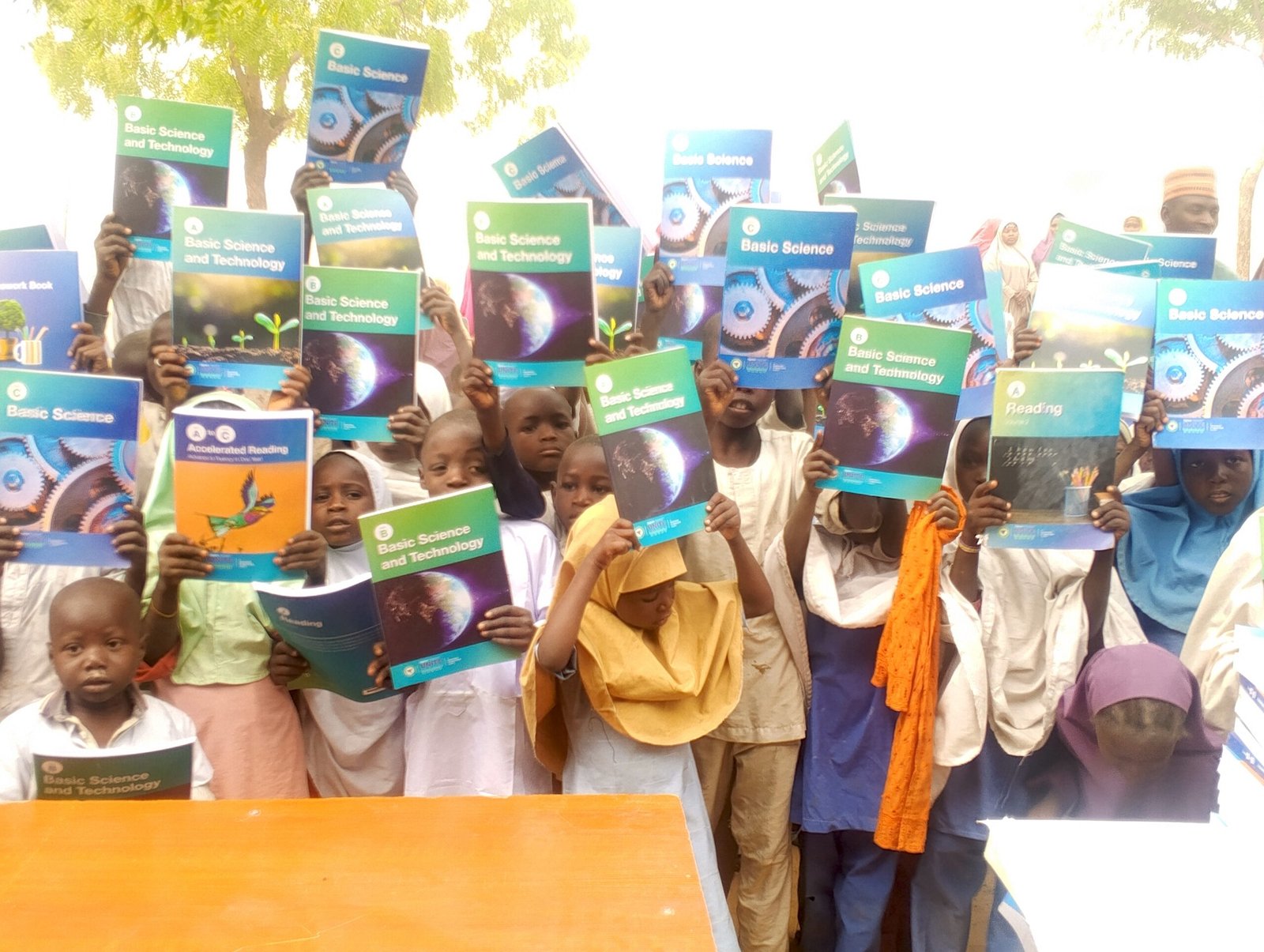
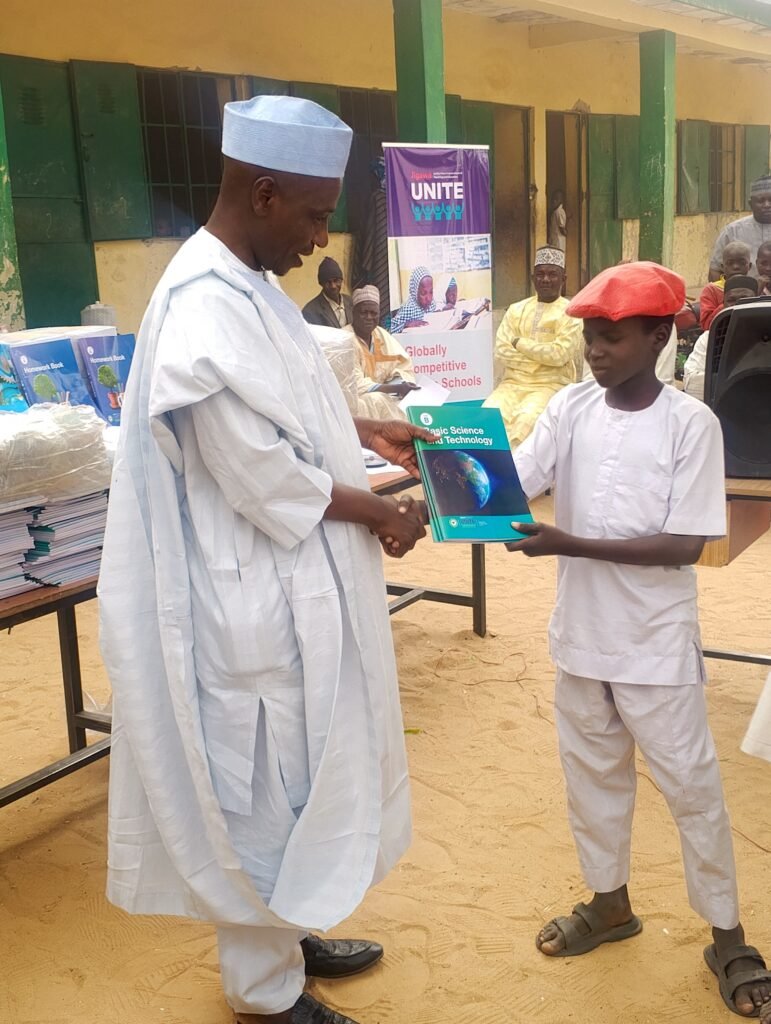
The Jigawa State Government has intensified efforts to transform basic education with the distribution of 247,597 teaching and learning materials under the JigawaUNITE education reform programme.
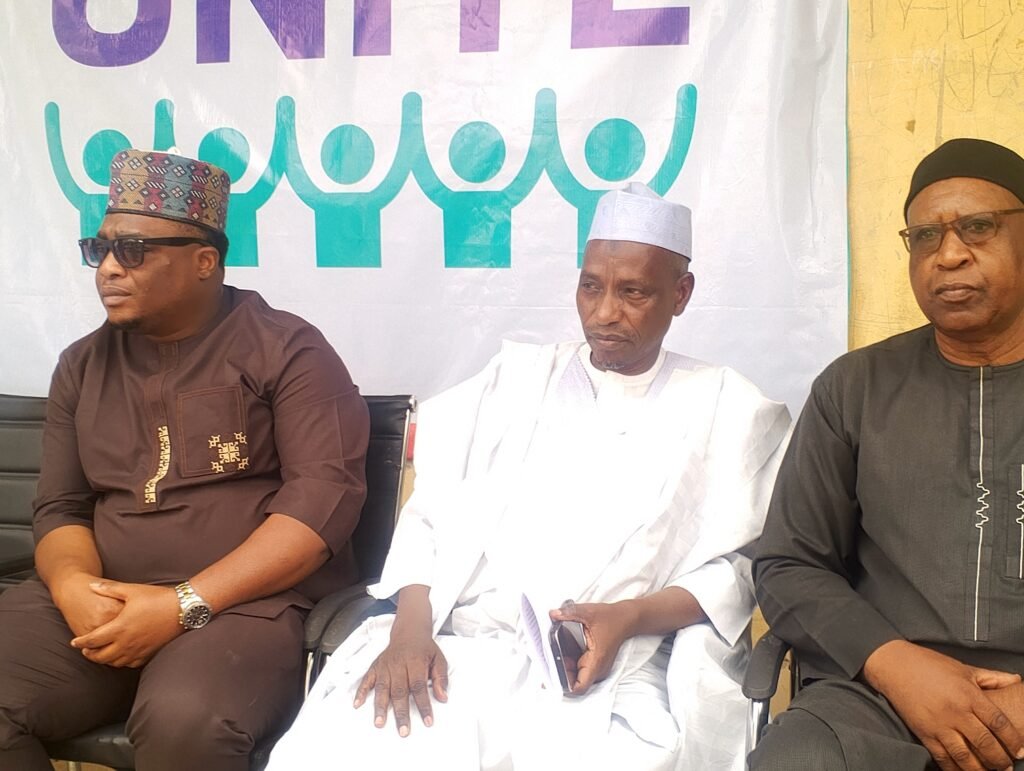
The Executive Chairman of the Jigawa State Universal Basic Education Board (SUBEB), Professor Haruna Musa, disclosed this at the JigawaUNITE book distribution ceremony held at Ansaruddeen Primary School, Kiyawa Local Government Area.
Professor Haruna Musa said the initiative aligns with the education pillar of Governor Malam Umar Namadi’s 12-point development agenda, which places education at the centre of sustainable development and human capital growth.
The SUBEB chairman explained that JigawaUNITE is a comprehensive and innovative programme designed to improve learning outcomes through enhanced teaching methods, adequate learning resources and the integration of technology into classroom instruction.
According to the programme is being implemented by SUBEB under the supervision of the Ministry of Basic Education, with technical support from NewGlobe, an international education reform organisation.
He noted that JigawaUNITE is currently operational in 250 primary schools across 20 local government areas, serving 87,543 pupils and supported by 1,480 trained teachers.
He added that as part of the first phase of implementation, teachers were equipped with modern, technology-based instructional skills to meet global standards.
“Providing details of the material distribution, the SUBEB chairman said a total of 247,597 academic materials had been delivered so far, comprising 194,380 items distributed in the first term and 53,217 in the second term of the current academic session”.
He explained that the materials include over 57,000 assorted curriculum textbooks for pupils and teachers, alongside other instructional resources to complement digital learning in classrooms.
“These materials represent more than books; they symbolise opportunity, knowledge and a pathway for our children to realise their full potential,” he also stressing that the programme is anchored on the principle that education is a right and not a privilege.
Also speaking, Chairman of the JigawaUNITE Programme, Mr. Habib Saleh, said the initiative was conceived by Governor Namadi to reposition the state’s education system in line with global best practices through digital innovation.
He noted that baseline assessments conducted at the inception of the programme revealed weak learning outcomes, but recent evaluations have shown significant improvement.
“Feedback from examinations, continuous assessments and testimonies from parents, teachers and school leaders indicate clear progress within a short period,” adding that school visits and engagements with school-based management committees and mothers’ associations have further confirmed the programme’s positive impact.
He, however, identified teacher commitment in some rural areas as a key challenge, citing issues such as late resumption and early closure of schools, but assured that SUBEB and relevant monitoring bodies are addressing the situation.
Looking ahead, the state government plans to expand JigawaUNITE to an additional 350 schools, bringing the total number of participating schools to 600 statewide.
The expansion, according to officials, will be accompanied by sustained investment in teacher training, community engagement and data-driven assessments to continuously refine implementation strategies.
With continued commitment, the government expressed confidence that JigawaUNITE would produce a new generation of pupils with improved learning outcomes and strong digital skills, positioning Jigawa State as a model for basic education reform in Nigeria.