


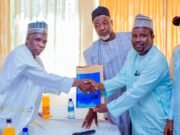
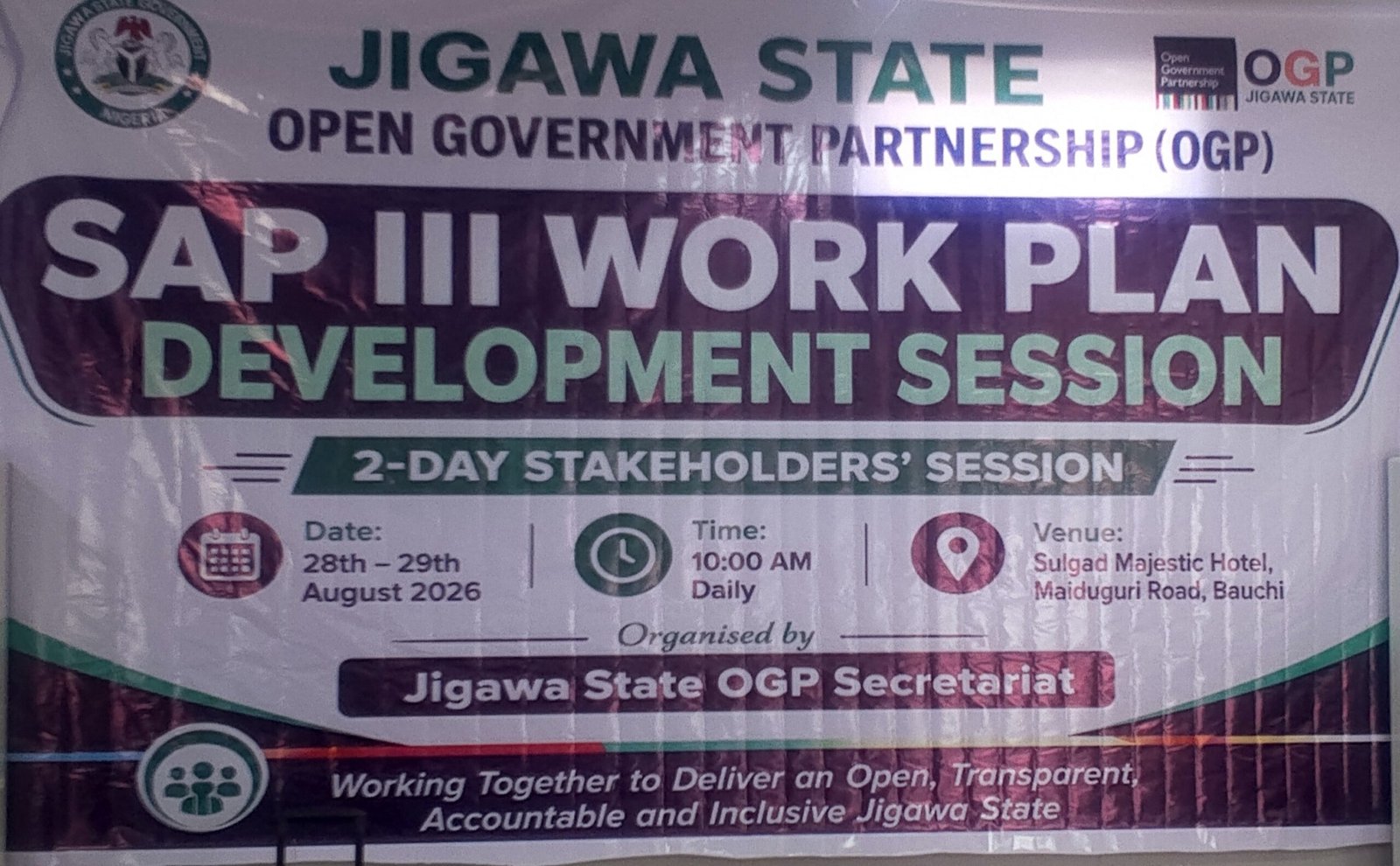
By Ahmed Rufa’i, Dutse
The Open Government Partnership (OGP) has identified citizen participation, transparency, accountability, access to justice, climate action and anti-corruption as key pillars of Jigawa State’s third State Action Plan (SAP III).
The OGP Co-Chair, Mr. Isah Mustapha, disclosed this in a presentation during the review of the Jigawa State SAP III work-plan development held in Bauchi.
Mustapha said SAP III was designed to advance open, inclusive and responsive governance capable of delivering tangible improvements in the lives of citizens.
According to him the plan targets 100 per cent availability of budget information in a publicly accessible format, a 60 per cent increase in citizen engagement, a 30 per cent improvement in justice delivery, and a 50 per cent increase in anti-corruption reporting and awareness.
Mustapha, however, stressed that the quality of the SAP III document alone would not determine its success.
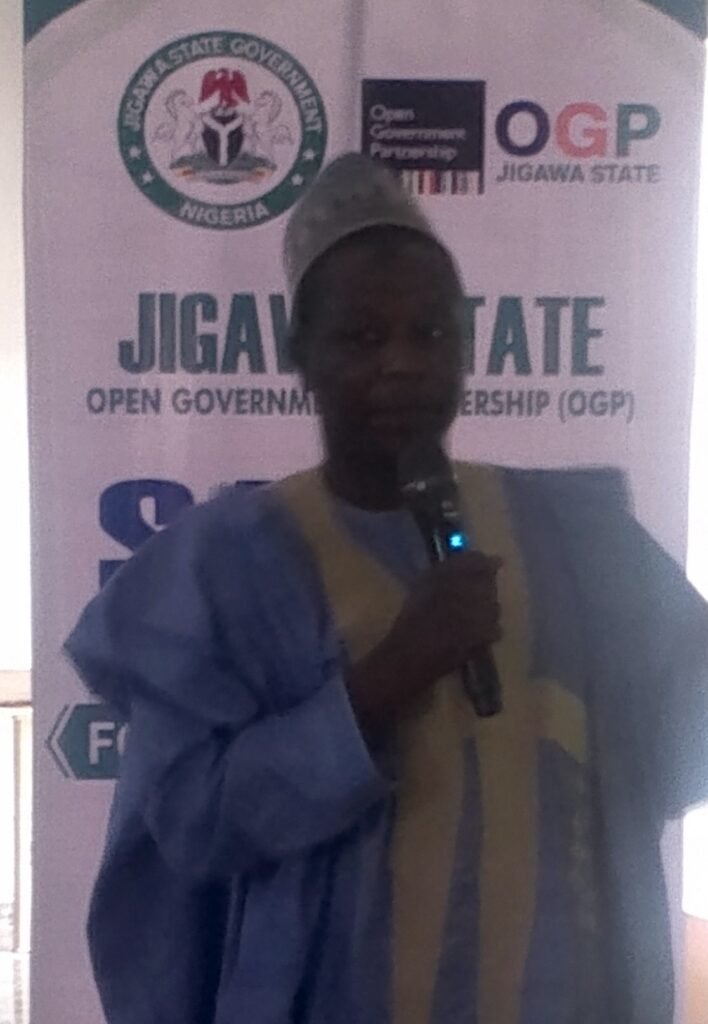
He said: “The quality of this document will not measure the success of SAP III, but by the quality of governance and services experienced by the people of Jigawa State.”
According to him, Jigawa State joined the OGP in 2016, before implementing its first State Action Plan (SAP I) between 2017 and 2018, with commitments focused on transparency, accountability and citizen engagement.
He said the state subsequently implemented SAP II between 2019 and 2021, which deepened governance reforms and expanded their impact across priority sectors.
Mustapha explained that the co-creation of SAP III took place between 2024 and 2025 through wide stakeholder consultations, while the draft plan was validated in July 2026 through multi-stakeholder reviews and feedback.
He said the implementation phase would cover 2026 to 2028, stressing that the success of the plan would depend on effective collaboration among government institutions, civil society organisations, development partners, the private sector, the media and citizens.
On the first commitment, Fiscal Transparency and Accountability, Mustapha said the plan seeks to improve citizens’ understanding of budgets and expenditure, strengthen public participation in economic and procurement processes, and promote greater fiscal accountability.
He said the second commitment, Access to Justice, would focus on improving access to affordable and timely justice, particularly for vulnerable groups, through measures including fast-tracking gender-based violence cases, reducing delays in civil litigation and expanding alternative dispute resolution mechanisms.
The OGP Co-Chair said the plan would also strengthen support services for survivors and improve the capacity of relevant institutions to provide effective justice services.
On Climate Action, Mustapha said SAP III recognises the need to strengthen Jigawa’s resilience to climate change through responsible energy use, clean cooking, flood management, tree planting, climate-smart agriculture and sustainable financing.
He added that the commitment would support measures aimed at improving environmental sustainability while strengthening communities’ capacity to respond to climate-related challenges.
On the fourth commitment, Anti-Corruption, he said SAP III would strengthen preventive and accountability mechanisms, improve public oversight and promote integrity in the management and use of public resources.
Mustapha added that the implementation framework would involve the State Steering Committee, Technical Working Groups, OGP Secretariat, implementing ministries and agencies, citizens and other stakeholders, with regular monitoring and feedback mechanisms.
He said the expected outcomes by 2028 included more transparent budgeting, increased citizen participation, improved justice delivery, stronger anti-corruption systems, increased climate resilience, better service delivery and greater public trust in government.
According to the presentation, the plan targets 100 per cent availability of budget information in a publicly accessible format, a 60 per cent increase in citizen engagement, a 30 per cent improvement in justice delivery, and a 50 per cent increase in anti-corruption reporting and awareness.
Mustapha, however, stressed that the quality of the SAP III document alone would not determine its success.
He said: “The quality of this document will not measure the success of SAP III, but by the quality of governance and services experienced by the people of Jigawa State.”
He therefore urged all stakeholders participating in the work-plan development process to translate the commitments into realistic, measurable and implementable activities capable of producing visible benefits for the people of the state.