
Written By: Ahmed Rufa’i in Dutse
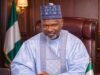
The ruling All Progressives Congress (APC) in Jigawa State, under Governor Malam Umar Namadi, appears to be intensifying efforts to woo the 2023 Peoples Democratic Party (PDP) gubernatorial candidate, Alhaji Mustapha Sule Lamido, the Santurakin Dutse, as part of a broader strategy to counter rising defections and secure victory in the 2027 general elections.
In Nigerian politics, elections are rarely won on party logos alone. They are determined by structures, numbers, alliances, and, crucially, by individuals with the capacity to mobilise votes across communities and party lines.
In Jigawa, Mustapha Sule Lamido has emerged as one of such figures an influential political force whose reach continues to shape the state’s electoral arithmetic.
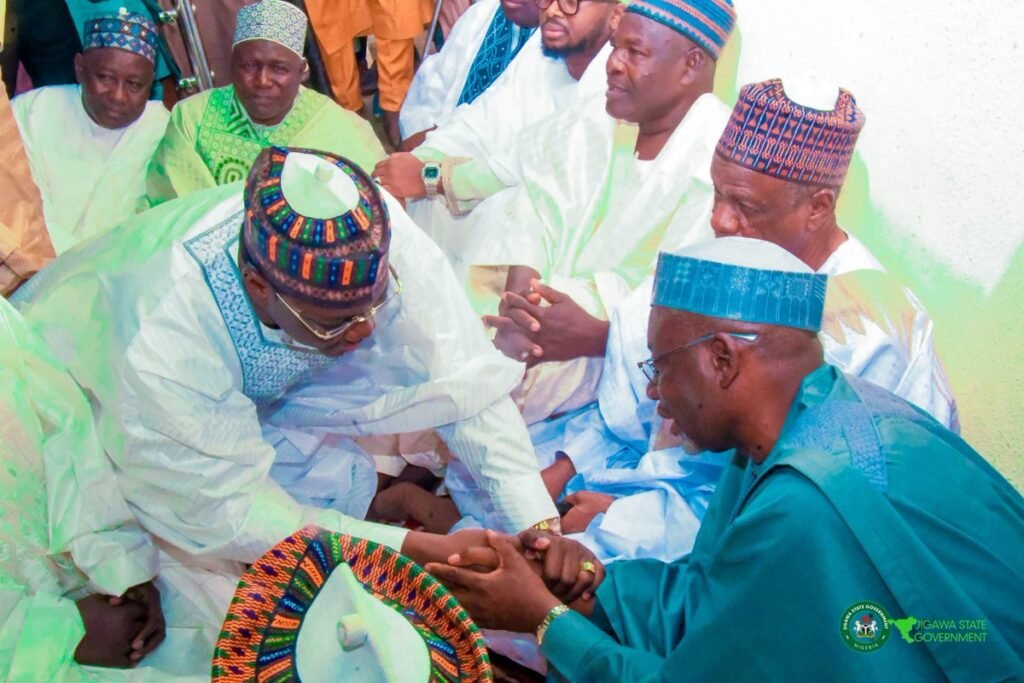
Governor Namadi, who is seeking a second term, is also under pressure to fulfil the APC’s broader electoral objective of delivering all elective positions in the state and a projected two million votes to President Bola Ahmed Tinubu in 2027.
While incumbency offers access to state machinery and institutional advantages, recent developments suggest that the path may no longer be as straightforward as initially assumed.
The emergence of the African Democratic Congress (ADC), coupled with ongoing defections from the APC by prominent political figures and grassroots supporters reportedly linked to disagreements between Governor Namadi and his predecessor, Alhaji Mohammed Badaru Abubakar has altered the political landscape in the ahead of 2027.
The shifting dynamics have compelled the APC leadership to reassess its strategy.
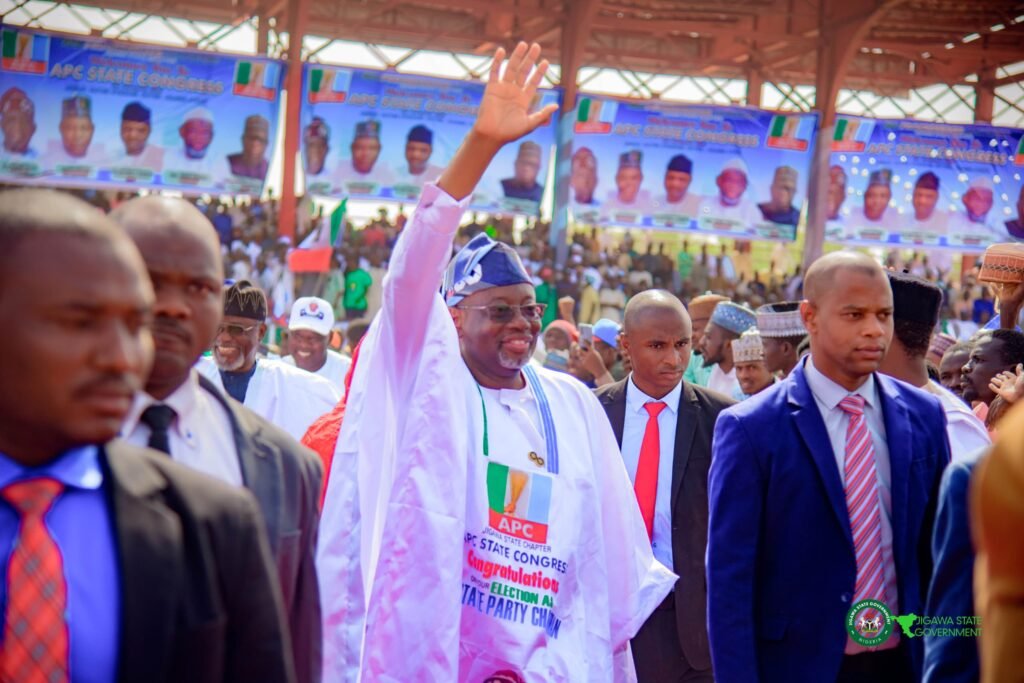
Findings indicate that the APC is now making calculated moves to bring Mustapha Sule Lamido and his formidable political structure into its fold.
The calculation is clear neutralise opposition strength while consolidating the party’s base ahead of a potentially competitive election cycle.
Political observers note that Lamido’s appeal lies in his deep grassroots connections and his proven ability to mobilise voters.
Interestingly, many key figures in the ADC are political adversaries to both Lamido and Governor Namadi, making the ADC a shared opponent and creating a convergence of interests.
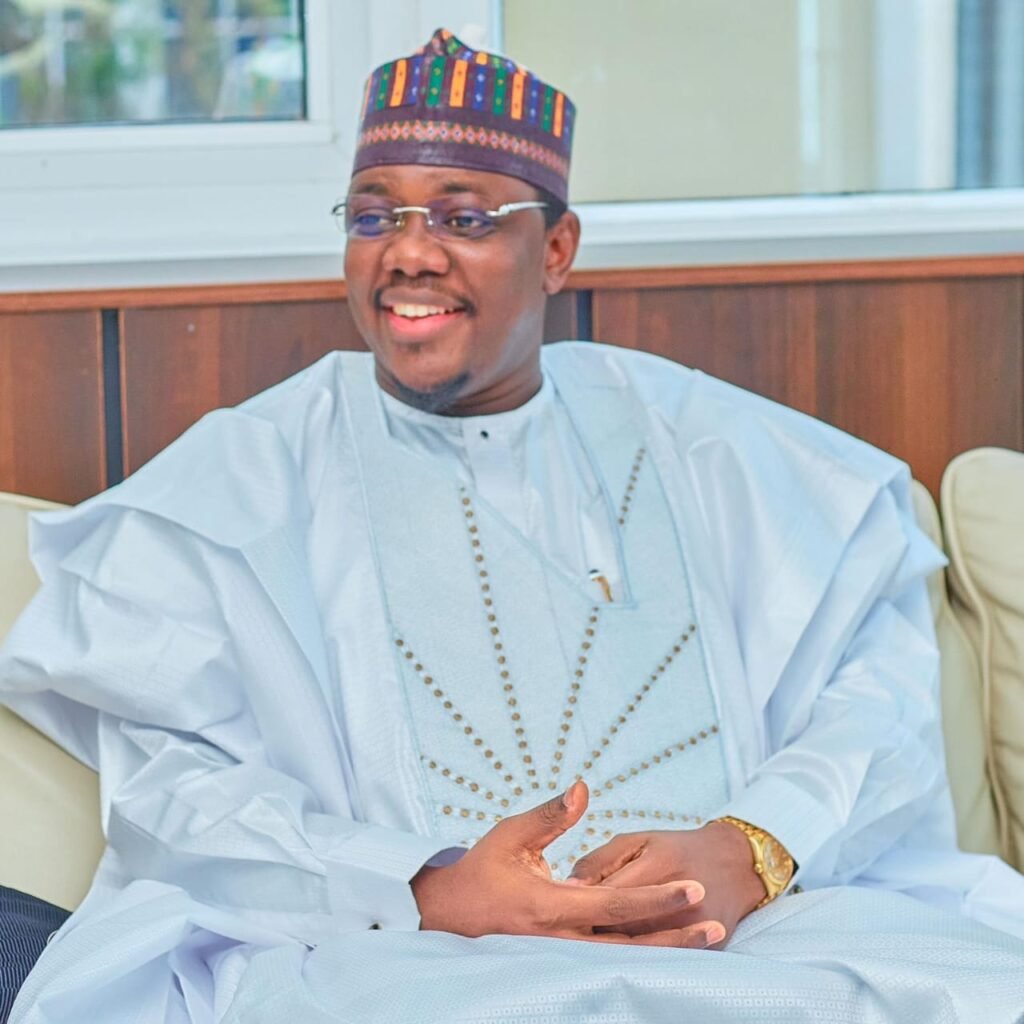
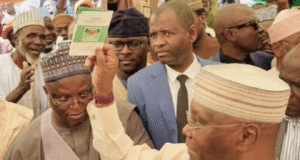
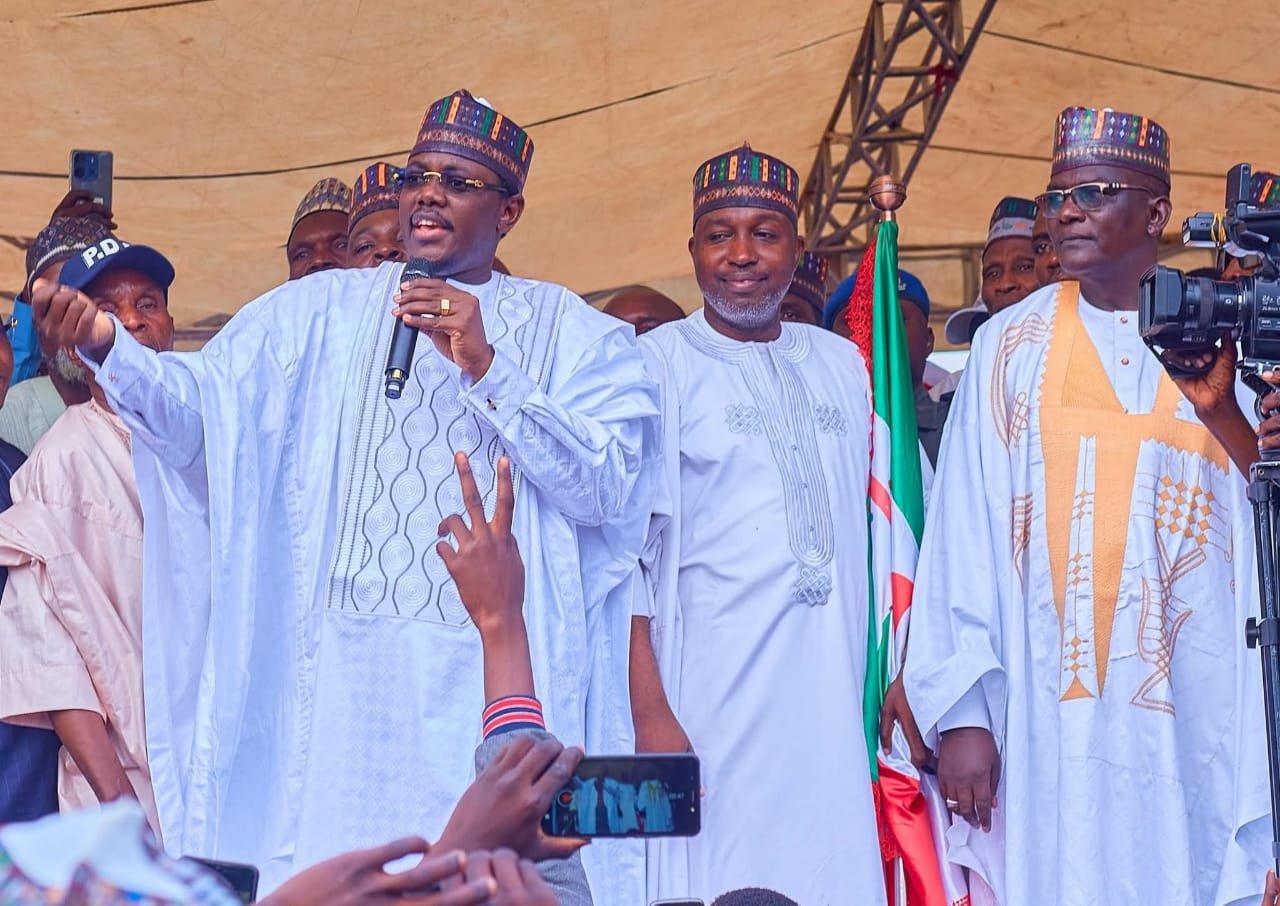
Today, Mustapha Sule Lamido stands at the centre of Jigawa’s political calculations. Often described as the “new bride” of the state’s politics, his rising profile reflects not just popularity but demonstrated electoral strength. Despite operating outside the ruling party, he has built a structure that rivals that of incumbency.
Jigawa State, located in the North-West Nigeria’s most vote-rich geopolitical zone remains a critical battleground.
With over 2.3 million registered voters as of the 2023 elections, the state is too significant to be taken for granted. Any serious presidential contender must secure strong margins in Jigawa to remain competitive nationally.
President Tinubu’s 2023 victory in the state, with 421,390 votes, was decisive but not overwhelming. The PDP, powered largely by Lamido’s political machinery, secured 386,587 votes a narrow gap that exposed underlying competition beneath the APC’s dominance.
That performance underscored Lamido’s political weight. His influence extended beyond the presidential contest, delivering tangible victories for the PDP, including a senatorial seat in Jigawa South-West, two House of Representatives seats, and two State Assembly seats.
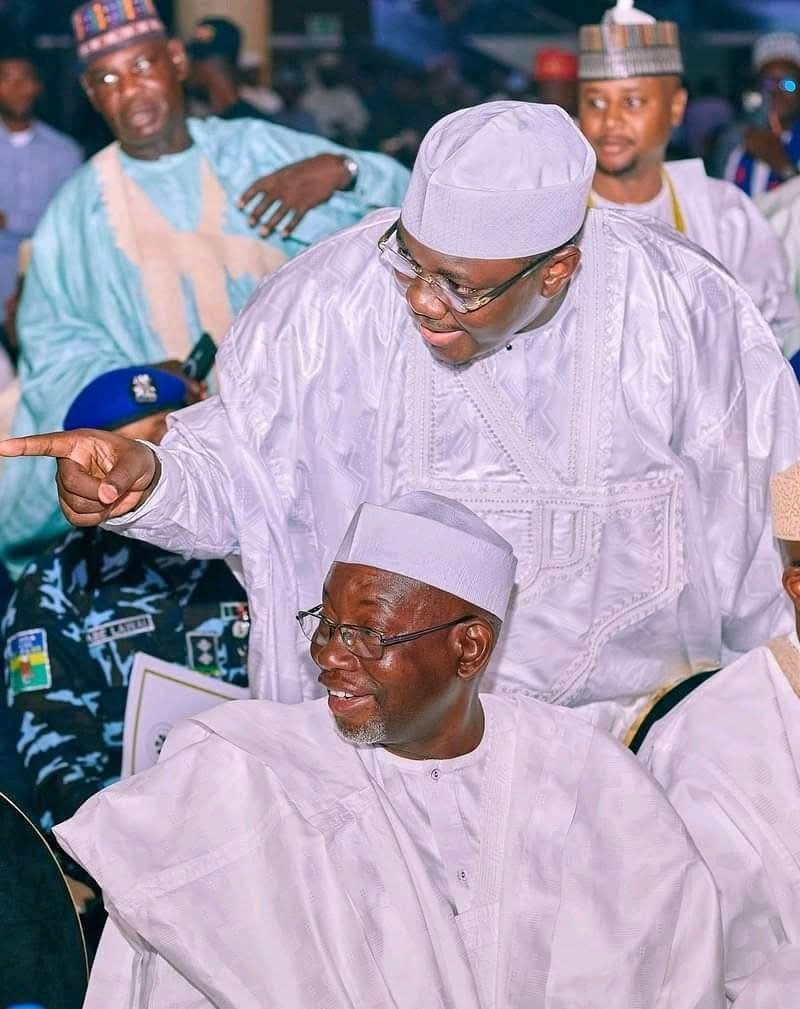
In a state where incumbency often dictates outcomes, this was a significant breakthrough.
The 2023 governorship election further reinforced his standing. While Governor Namadi won with 618,449 votes, Lamido secured a strong 368,726 votes, emerging as the only viable opposition candidate.
Santuraki’s performance represented a substantial voter base willing to align with his leadership vision despite the APC’s structural advantages.
Subsequent electoral contests have reinforced this momentum. The Babura/Garki by-election, for instance, saw the PDP defeat the APC even in a polling area associated with former Governor Badaru Abubakar a symbolic upset that signalled shifting grassroots loyalties.
Similarly, the fiercely contested Gumel/Maigatari/Sule Tankarkar/Gagarawa federal constituency election, which initially produced no clear winner, highlighted the narrowing gap between the APC and PDP. Although the APC eventually prevailed in the rerun, the message was unmistakable traditional strongholds are no longer guaranteed.
Against this backdrop, two possible scenarios are emerging ahead of 2027. The first is an opposition realignment. Should Badaru align with Lamido under a platform like the ADC, such a coalition could pose a serious challenge to both Governor Namadi’s re-election bid and President Tinubu’s chances in Jigawa.
The second scenario clearly more favourable to the APC, is the successful integration of Mustapha Sule Lamido into the ruling party. Such a move would significantly strengthen the APC’s electoral prospects, potentially guaranteeing Namadi’s second term, consolidating legislative dominance, and delivering overwhelming presidential votes for Tinubu.
For the APC at both the federal and state levels, performance will also remain a key factor. The Tinubu administration’s economic reforms and infrastructure drive, alongside the Namadi administration’s governance efforts in Jigawa, will be an adding advantage in shaping the voter perception.
However, in a competitive environment, performance alone may not suffice without strong political alliances and grassroots mobilisation.
This is where Lamido’s value becomes strategic. He has consistently demonstrated the ability to mobilise large voter blocs, sustain political structures, and challenge incumbency backed candidates.
In the high-stakes politics of the North-West, such capacity is indispensable.
As 2027 approaches, the political equation in Jigawa is increasingly defined by one constant, Mustapha Sule Lamido. Whether as an opposition leader or a potential ally within the APC, his influence is undeniable.
In the final analysis, Jigawa’s electoral future may hinge less on party platforms and more on personalities with proven capacity. And in that equation, Mustapha Sule Lamido stands not just as a contender, but as a decisive force one capable of shaping outcomes, redefining alliances, and determining victory.